
Rhaphiolepis delacourii
Rhaphiolepis delacourii André
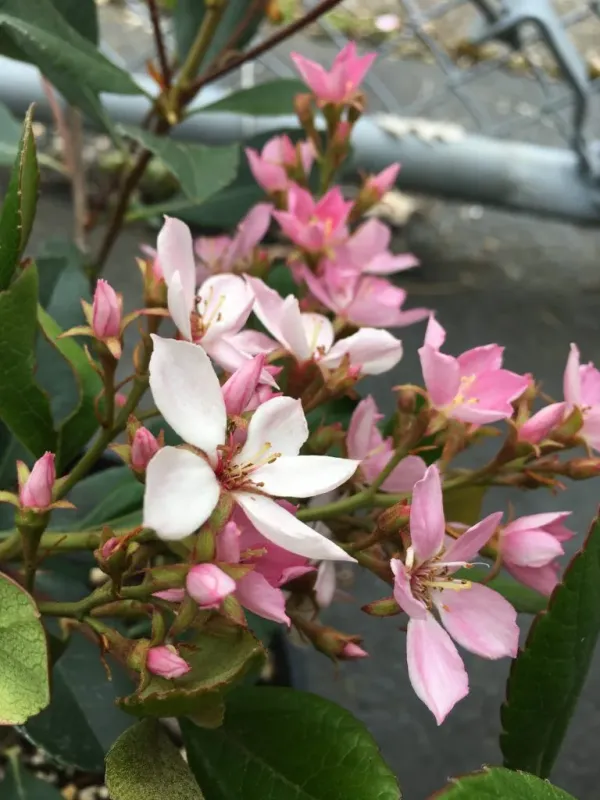
Description
Growing requirements
Rhaphiolepis delacourii is an evergreen flowering shrub belonging to the Rosaceae family. Known for its elegant appearance, this hybrid plant is highly valued in horticulture for its dense, glossy foliage and fragrant clusters of flowers that appear in spring.
The culture thrives in locations with full sun to partial shade. Providing sufficient light is crucial for maximizing the flowering potential and maintaining the plant's natural compact growth habit throughout the growing season.
Regarding soil requirements, the species performs best in well-drained, fertile soil that maintains a slightly acidic to neutral pH. Adequate drainage is mandatory, as the root system is susceptible to decay if exposed to constantly waterlogged conditions.
Agricultural management includes regular watering during dry spells, especially for younger plants still establishing their root systems. While established specimens show notable drought tolerance, they still benefit from consistent moisture during peak heat periods.
Rhaphiolepis delacourii is primarily utilized in landscape design for borders, hedges, and container gardening. Its ability to tolerate salt spray makes it an excellent choice for coastal gardens, where it remains one of the most reliable and aesthetic shrubs.
Main diseases and pests
Common health issues for this shrub include fungal spots and leaf blight, often triggered by overhead irrigation or poor ventilation within the canopy. Improving airflow around the plant through selective pruning is the primary method of disease prevention.
Pests such as scale insects can occasionally infest the stems and leaves, extracting plant sap and reducing overall vigor. Regular monitoring and the application of horticultural oils or specialized insecticides are effective measures for maintaining plant health.