
Indian hawthorn
Rhaphiolepis indica (L.) Lindl. ex Ker Gawl.
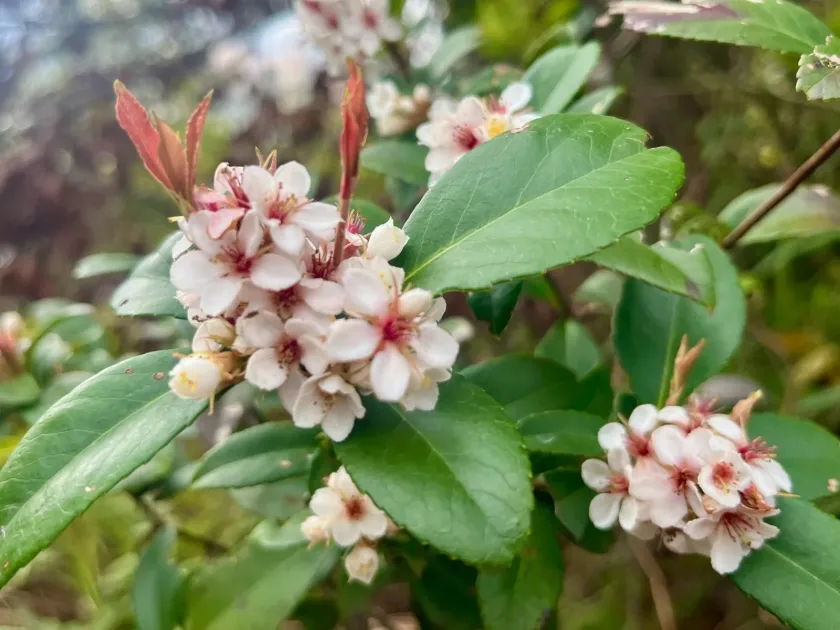
Description
Growing requirements
Indian hawthorn (Rhaphiolepis indica) is a popular evergreen ornamental shrub belonging to the Rosaceae family. It is prized for its dense growth habit, leathery foliage, and clusters of star-shaped, fragrant pink or white flowers.
Native to Southern China and Southeast Asia, this plant has gained international recognition in horticulture due to its versatility in landscape design and moderate growth rate.
The species thrives in warm, temperate to subtropical climates. While it displays some drought tolerance once established, it performs best in regions where extreme frost is absent, as excessive cold can damage its evergreen canopy.
Optimal soil conditions include well-draining, slightly acidic to neutral loamy soils. Proper drainage is critical to prevent root rot, which is a common physiological disorder in improperly managed sites.
Agronomic management involves standard care practices such as mulching for moisture retention, application of slow-release fertilizers in the early spring, and light pruning to maintain a desirable structure.
Main diseases and pests
Leaf spot disease, caused by various fungal pathogens, is a primary concern, especially in areas with high rainfall and poor air circulation.
Entomosporium leaf spot is frequently documented in Rhaphiolepis indica, leading to premature defoliation and weakened plant health.
Pests including scale insects and aphids often colonize the stems and foliage, requiring targeted application of horticultural oils or systemic insecticides.
Root-knot nematodes can impact plant health in sandy soils, necessitating pre-plant soil analysis and site preparation.
To mitigate these threats, growers should ensure proper spacing between plants to maximize airflow and avoid overhead irrigation that keeps foliage wet for extended periods.