
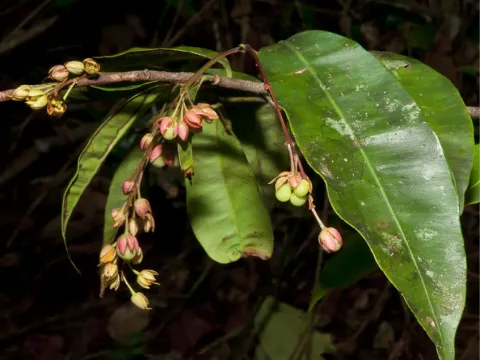
Rhabdophyllum
Rhabdophyllum
Rhabdophyllum is a genus of evergreen shrubs and small trees belonging to the Ochnaceae family. These plants are primarily native to the tropical forests of West and Central Africa, thriving in sheltered and shaded environments.
What the section contains
Rhabdophyllum
The plant requires consistently warm temperatures to sustain growth throughout the year. It does not tolerate frost or extreme cold snaps, making it suitable mainly for tropical greenhouse conditions or controlled indoor environments.
Successful cultivation depends on high-quality, well-draining soil that remains moist but never waterlogged. A substrate composed of peat, coarse sand, and organic loam is generally recommended to maintain optimal pH levels.
Humidity management is a critical aspect of Rhabdophyllum care. Because it originates from forest understories, it performs best in high humidity environments, often requiring misting or specialized equipment to prevent leaf dehydration.
Botany-wise, the plant is characterized by its simple, leathery leaves arranged in distinct patterns and small, often ephemeral flowers. Its growth rate is moderate, requiring periodic assessment of root development and pot size.
The primary pests affecting Rhabdophyllum in controlled environments are spider mites and scale insects. These pests thrive in dry conditions and can cause significant damage to the leaf structure if left untreated.
Root rot is the most common pathology associated with poor irrigation practices. Excessive water retention in the soil promotes anaerobic conditions, which quickly lead to the decay of the fine root system.
Fungal leaf spot diseases may appear if the foliage is kept wet for extended periods without adequate air circulation. Ensuring good airflow is essential to prevent the spread of spores across the canopy.
Nutrient deficiencies, particularly iron or magnesium, can occur if the soil pH drifts out of the optimal range. This is usually manifested as interveinal chlorosis, which can be corrected by adjusting the soil chemistry.
Integrated pest management (IPM) is strongly encouraged for this crop. Utilizing horticultural oils or biological predators can effectively manage populations of harmful insects without negatively impacting the plant's health.