
Red yucca
Hesperaloe parviflora (Torr.) J. M. Coult.
Description
Growing requirements
Red yucca (Hesperaloe parviflora) is a hardy perennial succulent belonging to the Asparagaceae family. Native to the Chihuahuan Desert and surrounding arid regions of Texas and Mexico, it is highly adapted to low-water environments.
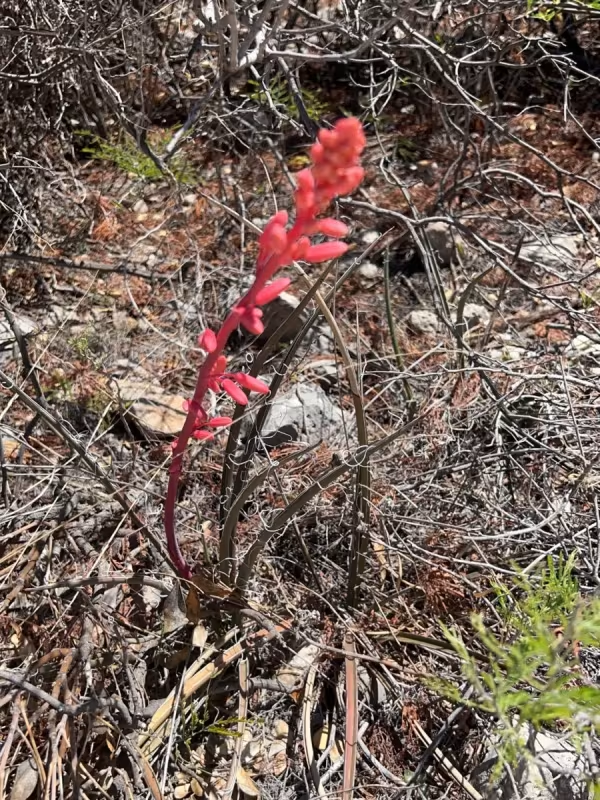
Botanically, it is characterized by arching, linear, grass-like leaves that grow in a rosette pattern. The plant is primarily valued for its dramatic, long-blooming flower stalks that reach up to 1.5 meters in height, bearing tubular, rose-red flowers throughout the summer.
Successful cultivation requires full sun exposure. While the plant can tolerate light partial shade, maximum flowering intensity and compact growth habit are achieved only under direct, unfiltered sunlight for most of the day.
The soil must have exceptional drainage properties to prevent root rot. This plant thrives in rocky, gravelly, or sandy soils where water does not accumulate. Incorporating inorganic materials like pumice or perlite into the planting hole is recommended for heavy soil types.
Temperature tolerance is a key feature of this species, as it handles intense heat and occasional frost without significant damage. Proper spacing is essential to ensure adequate airflow between mature rosettes, which helps in preventing moisture-related stress.
Main diseases and pests
The most common horticultural threat to Red Yucca is fungal infection, specifically root rot, which typically stems from over-irrigation or poorly draining soil. Ensuring the soil dries out completely between waterings is the primary defense strategy against these pathogens.
Insect pests are generally uncommon, but infestations of mealybugs or scale insects can occur in sheltered or overcrowded areas. Regular monitoring and spot treatment with horticultural oils or approved systemic insecticides effectively keep these populations under control.
Harvesting
While Red Yucca is not an agricultural crop in the traditional commodity sense, harvest-related practices involve the removal of spent flower stalks to maintain plant vigor. This is typically done in late autumn or early winter once the blooming cycle is completely finished.
Gardeners carefully prune the stalks near the base of the rosette using sharp, sterilized tools to ensure clean cuts. This process prevents the plant from wasting energy on seed production and promotes a tidier aesthetic for the following growing season.
Occasionally, seeds are harvested from dried capsules after the flowering season for propagation purposes. The capsules are collected when they begin to turn brown and split, then air-dried to extract the viable seeds for nursery production.
When propagating via division, harvest of offsets from the main plant is performed in early spring. This allows the new plantlets to establish root systems before the onset of extreme summer heat, ensuring higher survival rates in new locations.
Overall, maintenance harvesting is minimal and limited to aesthetic grooming. Its role in sustainable agriculture is predominantly as an ornamental crop that provides ecological benefits to pollinators in low-maintenance landscapes.