
Hesperaloe funifera
Hesperaloe funifera (K. Koch) Trel.
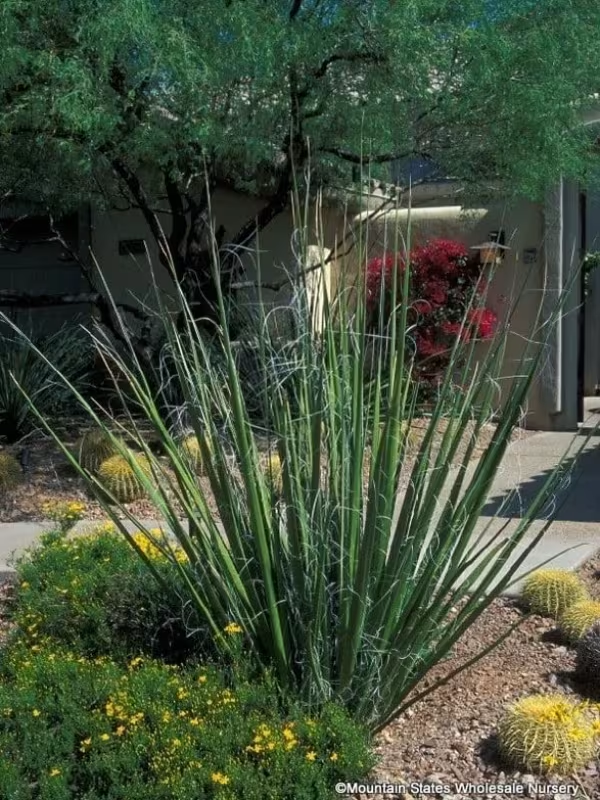
Description
Growing requirements
Hesperaloe funifera is a hardy, evergreen perennial species belonging to the Agavaceae family. Native to the arid regions of northern Mexico and parts of the United States, it is evolutionarily adapted to thrive in harsh environments with high solar radiation and low soil moisture.
The plant is characterized by a basal rosette of long, leathery, and fibrous leaves. These leaves act as the primary storage organs for water and nutrients, and they contain high-quality, long-staple fibers that have been historically prized for their tensile strength and durability.
Soil requirements for this crop are specific: it demands well-drained, porous soils. It is highly intolerant of waterlogging, which often induces root rot. Sandy or gravelly soils are ideal, as they mimic the natural drainage conditions of the plant's native ecological niche.
Temperature tolerance is a significant attribute of Hesperaloe funifera, as it can withstand both extreme heat and brief periods of freezing temperatures. This versatility makes it a resilient candidate for agricultural cultivation in semi-desert climates where traditional crops would fail.
Cultivation practices involve minimal intervention after the initial establishment phase. Weed management is crucial during the first two years of the plantation, but once the plants reach maturity, the density of their foliage effectively suppresses competing vegetation.
Harvesting
The primary economic value of Hesperaloe funifera lies in its fiber production potential. The fiber extracted from its leaves is exceptionally strong and flexible, making it suitable for high-end textiles, technical cordage, and specialty paper manufacturing.
Harvesting involves the selective cutting of mature leaves, typically starting when the plant is three to five years old. By removing only the outer, fully developed leaves, producers ensure the longevity of the plant and maintain a consistent annual harvest yield.
Post-harvest processing involves mechanical decortication, where the harvested leaves are crushed and scraped to isolate the vascular fiber bundles. Modern processing units have significantly improved the yield and purity of the fiber, reducing the waste generated during extraction.
The ability of the plant to regenerate leaf tissue after partial harvest allows for sustainable, multi-year production cycles. This reduces the need for frequent replanting, thereby lowering operational costs and carbon footprint compared to annual row crops.
Beyond fiber, ongoing research explores the utilization of leaf residues for biomass energy and bio-based composite additives. These developments highlight the plant's potential as a multi-purpose resource in modern sustainable agriculture and industrial manufacturing.