
Creeping buttercup
Ranunculus repens L.
Description
Growing requirements
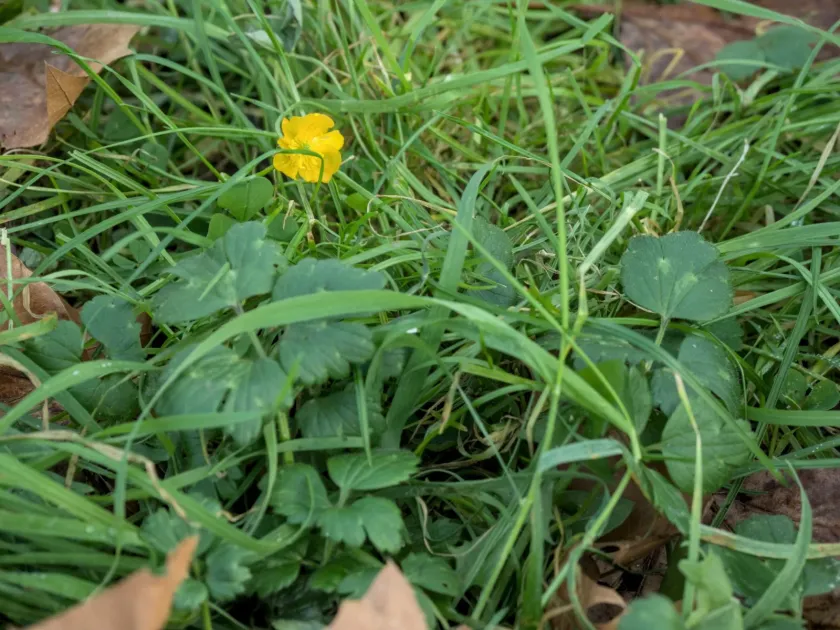
Creeping buttercup (Ranunculus repens L.) is a perennial herb belonging to the Ranunculaceae family. It is a cosmopolitan plant known for its aggressive growth habit and ability to thrive in a wide range of temperate environments across the globe.
The plant is characterized by its stolons (creeping stems) that root at the nodes, allowing it to cover large areas quickly. It typically grows in moist soils, particularly in wetlands, pastures, and poorly drained arable lands where other species struggle.
Botanically, it features pinnately compound leaves and iconic bright yellow, glossy flowers. Its adaptability to varying light conditions—from full sun to partial shade—makes it a highly successful colonizer of disturbed habitats.
In agriculture, it is often viewed as a noxious weed that competes for resources, particularly in damp areas of fields. Its presence can significantly reduce the quality of forage, as the plant is toxic to livestock when consumed fresh due to protoanemonin content.
While the toxicity levels drop upon drying, making it less dangerous in hay, large quantities of creeping buttercup in pastures remain an issue for grazing cattle and sheep. Proper identification and management are crucial for effective farm stewardship.
Main diseases and pests
Management of Ranunculus repens involves a combination of mechanical and chemical strategies. Because of its ability to regenerate from small stem fragments, mechanical removal must be thorough to prevent the plant from re-rooting.
Chemical control usually requires systemic herbicides applied when the plant is actively growing. Tank-mixing with surfactants is highly recommended to bypass the waxy cuticle of the leaves and ensure sufficient absorption of the active ingredient.
The plant can host various pests and diseases, such as mildews and aphids, which may spread to neighboring crops. Although not a primary host for major agricultural pests, it serves as a persistent reservoir that complicates integrated pest management.
Improving soil drainage is considered the most effective long-term preventative measure. By changing the environmental conditions to be less favorable for creeping buttercup, farmers can naturally suppress its spread and competitive advantage.
Integrated strategies should focus on crop rotation and the use of competitive cover crops to shade out the weed. Consistent monitoring during the early spring season is essential to identify and eradicate small patches before they develop into large, invasive mats.