
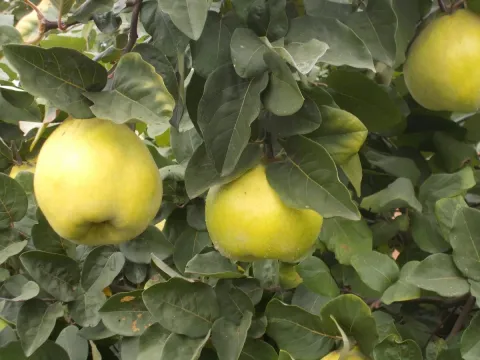
Pyrocydonia
Pyrocydonia
Pyrocydonia saplings are best planted in early spring before bud break or in autumn, allowing enough time for root establishment before the ground freezes.
What the section contains

Pyrocydonia
The planting site should be prepared by digging a wide hole, enriching the soil with organic matter such as compost or well-rotted manure to promote deep rooting.
When used as a clonal rootstock, the plants are spaced in nursery rows at distances that allow for mechanical maintenance and professional grafting techniques.
Correct planting depth is crucial; the root flare should remain level with the surface to prevent collar rot and ensure healthy development of the tree trunk.
Immediate irrigation after planting is essential to remove air pockets from the soil and to settle the roots firmly into the ground for optimal growth.
This crop thrives in well-drained, fertile loamy soils that possess good water-holding capacity while remaining aerated for healthy root development.
Full sun exposure is necessary for the plant to achieve its genetic potential in terms of both structural growth and, in some cases, fruit production quality.
Climate tolerance is similar to that of quince, favoring regions with moderate winters as the plant may be vulnerable to extremely low temperatures and frost.
Maintenance requires a balanced fertilizer regime, focusing on nitrogen in early spring to encourage vegetative growth and potassium in autumn for winter hardiness.
Water management is vital, as the plant demands consistent soil moisture to prevent stress, especially during the active growth phases in the summer months.
Fire blight is the primary pathological threat to Pyrocydonia, requiring strict sanitation practices and the removal of affected branches to prevent rapid spread.
Scab disease often manifests in damp weather conditions, necessitate the use of preventive fungicides during the early leaf-developing stages in the spring.
Pest populations such as aphids and various mite species can significantly impact plant vigor, requiring proactive monitoring and targeted biological or chemical control.
Root rot caused by poor soil drainage can weaken the tree's anchoring system, highlighting the importance of proper site selection and soil structure management.
Integrated pest management strategies should be implemented annually to maintain orchard health and ensure the longevity of the Pyrocydonia specimens.