
Pygmaeocereus bylesianus
Pygmaeocereus bylesianus
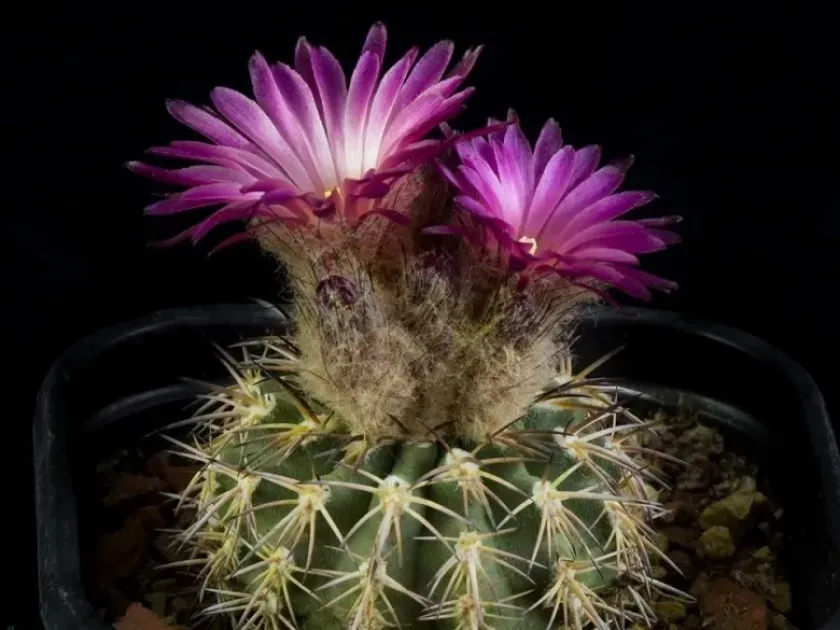
Description
Growing requirements
Pygmaeocereus bylesianus is a rare and highly sought-after member of the Cactaceae family. Originating from the arid regions of Peru, this miniature succulent is perfectly adapted to the harsh conditions of high-altitude rocky deserts.
Cultivation requires exposure to intense sunlight to maintain the plant's characteristic compact habit and strong spine development. In domestic conditions, a south-facing window or supplemental grow lights are essential for optimal health.
The substrate must be extremely well-draining, consisting primarily of mineral components such as coarse sand, grit, and volcanic rock. Organic matter should be kept to a minimum to prevent root suffocation and decay.
Watering practices must be strictly controlled according to the growth cycle. During the active growing season, water sparingly but thoroughly, ensuring the substrate dries out completely before the next irrigation.
A distinct dormancy period is vital for the biological cycle of this species. Lowering the temperature to approximately 10 degrees Celsius and suspending all watering during winter ensures proper development and successful flowering.
Main diseases and pests
Root rot remains the most common and fatal condition affecting these plants. It is typically caused by overwatering or soil mixes that retain moisture for too long, leading to a complete breakdown of the root system.
Spider mites are the most frequent pests, thriving in the dry, warm environments preferred by cacti. They feed on the sap of the plant, leaving behind unsightly discolored patches on the epidermis.
Mealybugs can also become an issue, hiding within the clusters of spines where they are difficult to detect. Manual removal or the use of systemic insecticides is often required to eliminate these pests entirely.
To prevent fungal infections, it is crucial to ensure good ventilation around the plant. Stagnant air coupled with moisture provides the perfect breeding ground for various pathogens that can ruin the appearance of the cactus.
Routine inspection of the plant's base and root structure is highly recommended. Early detection of any suspicious soft spots allows for surgical intervention before the infection spreads to the core of the stem.