
Purshia stansburiana
Purshia stansburiana
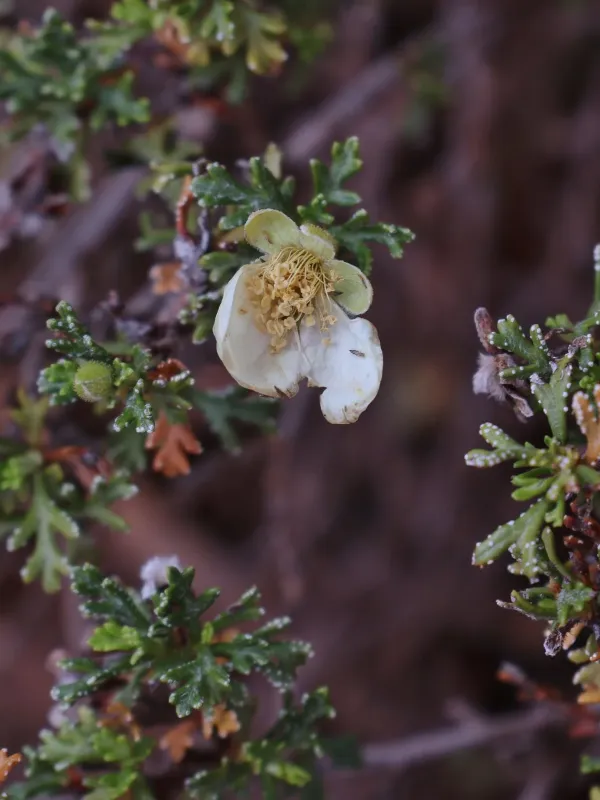
Description
Sowing dates
Propagating Purshia stansburiana is most successful through seeds, which require specific preparation due to their natural dormancy. A cold stratification period of 60 to 90 days at approximately 4°C is essential to ensure uniform germination rates.
For best results, seeds should be sown in the fall, allowing the winter conditions to provide the necessary natural stratification. Spring planting without pre-treatment often results in very low germination percentages.
Seeds should be planted in well-draining, sandy-loam soil at a depth of 1 to 2 centimeters. Maintaining a stable, slightly cool soil temperature during the germination phase is critical for the development of healthy seedlings.
Once seedlings emerge, they should be kept in a well-ventilated area with high light levels to prevent leggy growth. Overcrowding in the seedbed must be avoided to minimize the risk of damping-off disease.
Transplanting seedlings to their final location should be done carefully, as the plant develops a taproot that is sensitive to disturbance. Container-grown plants are often preferred for easier root-ball management during transplantation.
Growing requirements
Purshia stansburiana, commonly known as Stansbury cliffrose, is a member of the Rosaceae family. It is a hardy, evergreen shrub naturally adapted to the rocky, arid landscapes of the southwestern United States and similar climates worldwide.
The plant thrives in full sun, requiring exposure for most of the day to maintain its compact habit and prolific flowering. Shady conditions are detrimental to its structural integrity and can lead to sparse foliage.
Soil requirements are modest, with the plant performing best in alkaline, rocky, or gravelly substrates. Excellent drainage is non-negotiable, as the roots are highly susceptible to rot when exposed to prolonged dampness or stagnant water.
This species is exceptionally drought-tolerant once established, featuring deep root systems that allow it to access subsurface moisture. Supplemental irrigation is generally unnecessary and potentially harmful once the plants are mature.
Climatically, it is well-suited for high-altitude environments and areas with wide temperature fluctuations. It remains dormant during winter and resists freezing temperatures effectively, making it a reliable choice for cold-arid landscape projects.
Main diseases and pests
The most significant threat to Purshia stansburiana is the development of root and crown rots, which are almost exclusively caused by excessive soil moisture or improper drainage. Avoiding heavy, water-retentive soils is the primary preventative measure.
Insect pests, including aphids and various mites, may occasionally colonize the foliage during stress periods. However, these infestations rarely reach levels that cause long-term damage to healthy, well-situated plants.
Herbivory can be a concern, as deer and other native herbivores often browse on the stems and leaves during winter months when other forage is scarce. Protective fencing may be necessary in areas with high wildlife populations.
Fungal diseases like powdery mildew can manifest during periods of unusually high humidity. Maintaining adequate spacing between bushes is the best strategy to promote airflow and mitigate these risks.
As a low-maintenance agricultural or landscape plant, the focus should remain on environmental compatibility. When planted in the correct ecological zone, Purshia stansburiana is remarkably resilient and rarely requires chemical intervention.