
Mexican cliffrose
Purshia mexicana
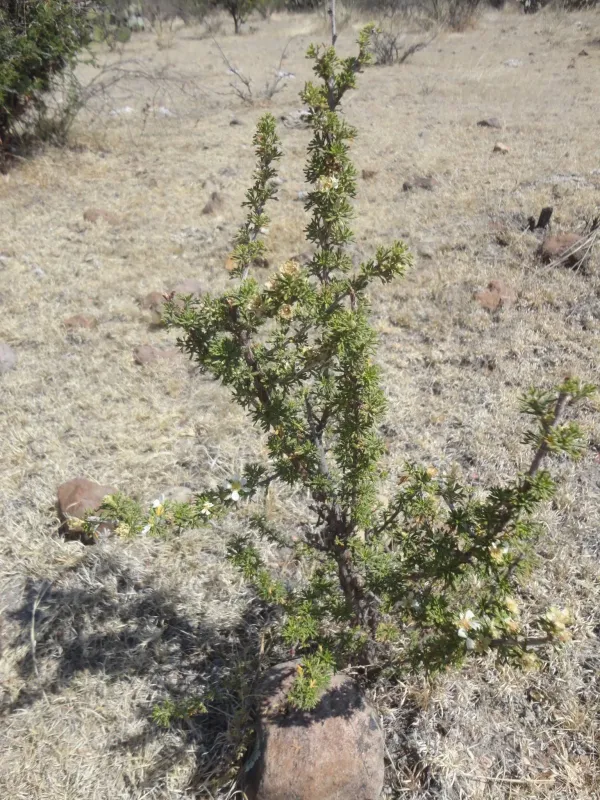
Description
Growing requirements
Mexican cliffrose (Purshia mexicana) is a hardy perennial shrub belonging to the Rose family (Rosaceae), native to the arid environments of Mexico and the Southwestern United States.
This species is highly adapted to rocky, coarse-textured soils and thrives in regions characterized by low precipitation and significant temperature fluctuations.
From an agricultural standpoint, it serves as a critical component in rangeland improvement, providing excellent ground cover and erosion control on degraded landscapes.
The plant requires full sun exposure and excellent soil drainage, as it is extremely sensitive to waterlogged conditions that can lead to root rot.
Its deep taproot system allows it to withstand severe drought, making it an essential plant for xeriscaping and reclamation projects in desert regions.
Main diseases and pests
The species faces several phytosanitary challenges, including fungal infections that may occur if the plant is subjected to unusually humid and stagnant air conditions.
Various insect pests, such as defoliators and borers, can impact plant health by feeding on leaves and stems, potentially weakening individual bushes.
Overgrazing remains the most significant threat to the survival of the cliffrose, as heavy browsing prevents the plant from setting seeds and replenishing its reserves.
Wildfires are a major concern, as the plant is not fire-tolerant and may require several years of protection to naturally re-establish in affected areas.
Integrated management plans, including pest monitoring and grazing exclusion zones, are recommended to preserve the vitality of Mexican cliffrose populations.
Harvesting
The primary agricultural use of Mexican cliffrose is as a high-quality forage crop, providing essential protein and nutrients for livestock and wildlife, particularly in winter.
It remains palatable throughout much of the year, which makes it a preferred plant for range managers looking to enhance the sustainability of pasture lands.
Seed harvesting is conducted in late summer, followed by careful processing to ensure high germination rates for future reforestation and reseeding efforts.
Proper harvest management involves rotational grazing to prevent overutilization, ensuring that the shrub has enough time to recover its biomass.
The aesthetic value of its flowers also permits minor use in specialized landscaping, where it serves as a drought-resistant ornamental shrub.