
Pseudolithos migiurtinus
Pseudolithos migiurtinus
Description
Sowing dates
Sowing Pseudolithos migiurtinus seeds requires a warm, stable environment with temperatures between 25°C and 30°C. Spring is the most suitable time for sowing, as the increasing day length supports the initial growth phase.
The substrate must be highly inorganic, consisting of fine pumice, perlite, or sterile coarse sand. Proper drainage is crucial from the very first day to prevent the delicate seeds from rotting before germination.
Seeds should be lightly covered with a thin layer of sand and kept under a transparent cover to maintain consistent moisture. Once the first seedlings emerge, it is vital to gradually introduce fresh air by removing the cover.
Light intensity is a critical factor for juvenile plants. They should be kept in bright, indirect light to prevent etiolation, which can permanently damage the plant's structural integrity and aesthetic shape.
Patience is required when propagating this species, as the initial growth rate is extremely slow. Transplanting young plants should be done with minimal disturbance to the root system to prevent shock.
Growing requirements
Pseudolithos migiurtinus is a fascinating member of the Apocynaceae family, native to the arid rocky landscapes of Somalia. It is highly adapted to extreme drought and direct, intense sunlight.
Cultivation requires a specialized, very fast-draining potting mix. A mixture of gravel, zeolite, and a tiny amount of organic substrate ensures that water does not remain around the roots for extended periods.
During the growing season, the plant thrives in temperatures between 22°C and 35°C. In winter, it requires a dry dormant period in a well-ventilated location, with temperatures preferably kept above 15°C.
Watering must be minimal and extremely careful. It is best to water only when the plant shows signs of dehydration or when the soil mix is entirely dry for several days, avoiding any contact with the plant's surface.
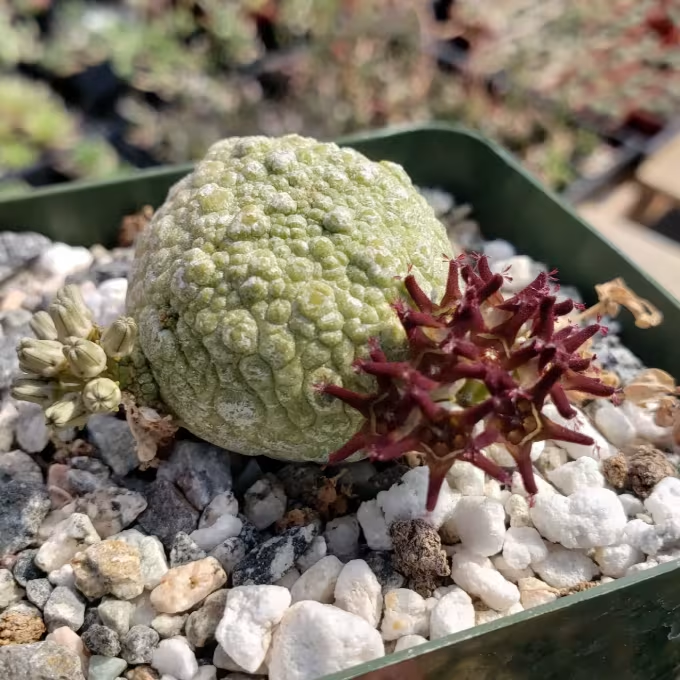
The plant's botanical structure is characterized by a firm, succulent stem with a tessellated, tuberous surface. It lacks foliage, relying entirely on the stem for photosynthesis and moisture storage.
Main diseases and pests
The primary threat to this species is overwatering, which leads to rapid stem and root rot. Because the plant's tissue is so water-retentive, once decay begins, it can spread throughout the organism in a matter of days.
Mealybugs are the most common pests, often settling in the deep crevices between the stem's tubercles. Regular inspection is necessary to catch infestations early before they cause significant structural damage.
High humidity combined with stagnant air can trigger fungal infections. These appear as soft or discolored patches on the stem and require immediate surgical removal of the affected tissue followed by sulfur dusting.
For chemical protection, systemic insecticides and fungicides are effective if applied during the active growing season. Always ensure the plant is healthy and well-hydrated before applying any chemical treatments.
Maintaining a strictly dry environment during the dormant season is the most effective preventative measure against the common health problems associated with this unique succulent species.