
Pseudolithos dodsonianus
Pseudolithos dodsonianus
Description
Growing requirements
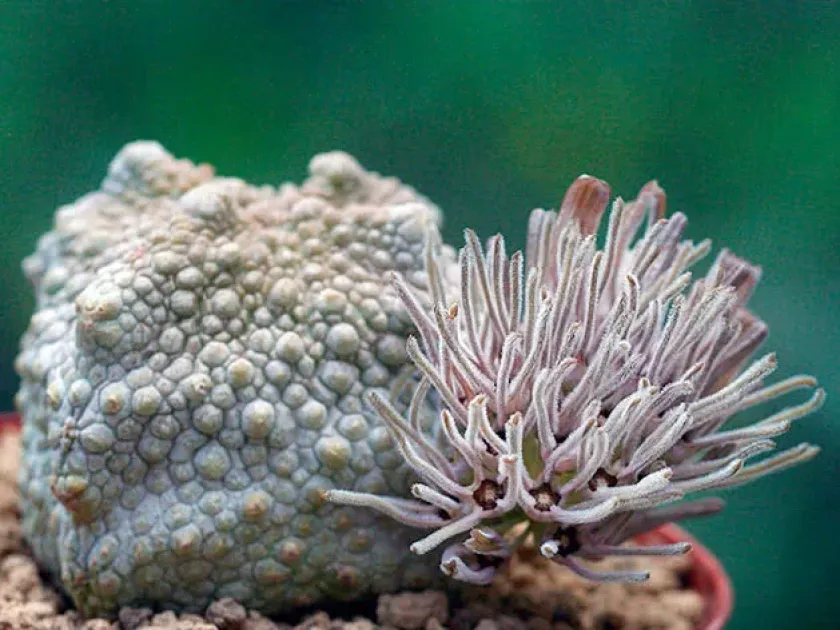
Pseudolithos dodsonianus is a fascinating member of the Apocynaceae family, native to the arid regions of Somalia. This succulent is highly prized for its unique, almost geometric, cube-shaped stem that allows it to store moisture effectively in harsh, dry environments.
The culture requires high levels of bright light to maintain its structural integrity and avoid etiolation. However, intense direct sunlight during the peak of summer can cause epidermis damage; therefore, light shading or a sheer curtain is recommended during the hottest periods of the year.
For the soil, a highly inorganic, fast-draining substrate is critical. A mix consisting primarily of pumice, perlite, and coarse sand, with very little to no peat or compost, is ideal. This ensures that water passes through quickly, preventing the roots from staying wet for extended periods.
The watering schedule must be strictly managed. During the active growth period, provide moderate water only after the substrate has completely dried out. Throughout the dormant winter season, water should be withheld almost entirely to mimic the plant's natural arid habitat and prevent rot.
Temperature requirements are quite specific: this plant thrives in warmth, ideally between +20°C and +30°C. Cold drafts and temperatures below +15°C must be avoided, as the plant is highly sensitive to cold-induced stress which often manifests as tissue decay.
Main diseases and pests
The most significant threat to Pseudolithos dodsonianus is fungal rot, usually triggered by excessive humidity or waterlogging of the soil. Once rot begins at the base, it can spread rapidly through the stem, making recovery extremely difficult.
Mealybugs are the most common pest found on this species. They often hide in the crevices of the stem, making them difficult to detect. Regular inspection and the use of systemic insecticides are essential for maintaining a healthy specimen.
Spider mites can occasionally appear if the environment is too dry and air circulation is poor. While they do not frequently attack this specific species, they can cause surface scarring that ruins the plant's unique appearance permanently.
To prevent disease, ensure there is constant, gentle air movement around the plant. This helps to dry the surface of the stem after any moisture and prevents the growth of mold or fungus in the immediate vicinity of the root zone.
Always sterilize tools before pruning or propagation to avoid spreading infections between plants. If an infection is detected early, mechanical removal of affected parts followed by treatment with a suitable fungicide may save the plant, provided it is kept in a dry environment thereafter.