
Pseudolithos cubiformis
Pseudolithos cubiformis
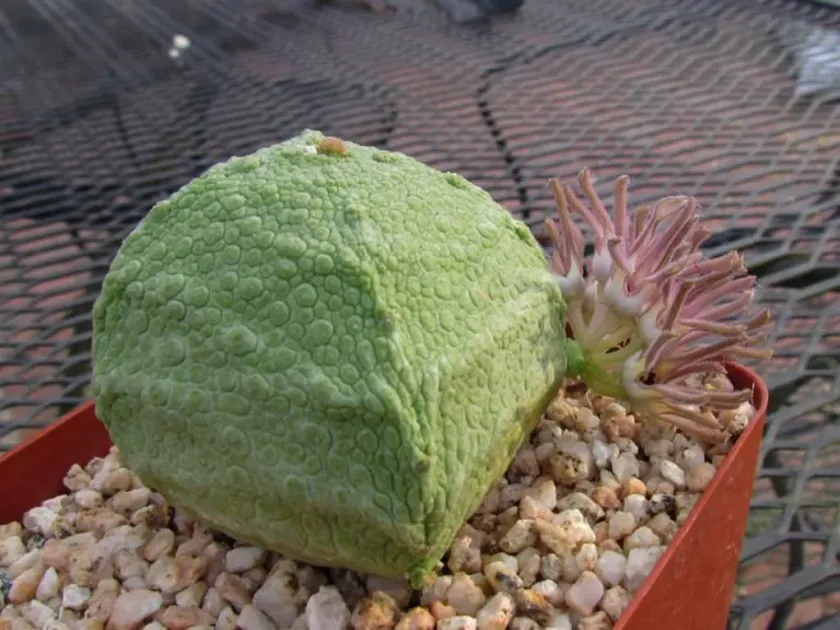
Description
Growing requirements
Pseudolithos cubiformis is a highly sought-after succulent species belonging to the Apocynaceae family. Native to the rocky, arid habitats of Somalia, it has evolved a distinctive, stone-like appearance to mimic its surrounding environment.
Cultivation requires conditions that closely mimic its natural desert habitat. A bright, airy location with ample indirect light is essential for maintaining the plant's compact, cubical structure and preventing etiolation.
The choice of soil is paramount; the substrate must be highly porous and inorganic. A mixture consisting of coarse pumice, lava rock, and a fraction of high-quality sand provides the necessary drainage to prevent moisture buildup around the roots.
Temperature management requires consistency. This plant thrives in warm environments, ideally between 22 and 28 degrees Celsius, and must be protected from any drafts or sudden temperature drops, which can induce stress.
Watering frequency is minimal and depends heavily on light intensity and ambient heat. The growing medium must dry out completely between waterings, as the roots are highly susceptible to oxygen starvation if kept moist for too long.
Main diseases and pests
The primary threat to the health of Pseudolithos cubiformis is stem rot caused by pathogenic fungi. This usually occurs when the plant is kept in humid conditions or watered while the substrate is still saturated.
Root mealybugs pose a significant challenge, as they often infest the root system undetected. Regular checks of the root ball when repotting are recommended to ensure early detection of these sap-sucking pests.
Spider mites can also cause significant damage by piercing the plant's skin, leaving behind scarred, discolored patches. These infestations are most common during the hot summer months when air circulation is poor.
Chemical control must be approached with caution. Many standard pesticides contain solvents that can burn the succulent's surface, so it is safer to use biological controls or diluted systemic treatments.
Maintaining a clean growing environment and ensuring proper air movement are the best defenses against both diseases and insect pests, ensuring the longevity of this rare botanical specimen.