
Mexican flame vine
Pseudogynoxys cordifolia
Description
Growing requirements
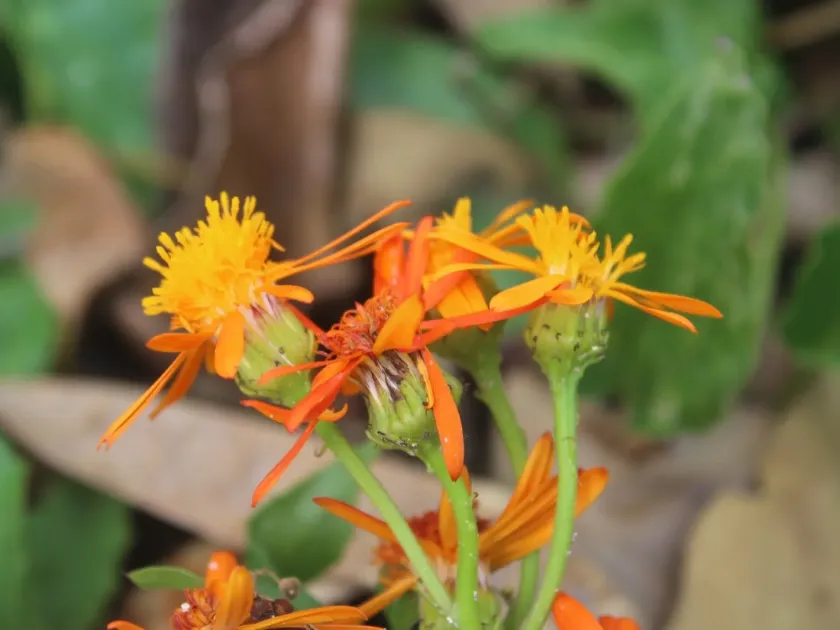
The Mexican flame vine, botanically known as Pseudogynoxys cordifolia, is a vigorous evergreen vine belonging to the Asteraceae family. It is highly valued in horticulture for its rapid growth rate and stunning orange-red, daisy-like flower heads that bloom profusely.
Native to tropical regions of Central and South America, this plant is strictly adapted to warm climates. It does not tolerate frost and is typically grown as a container plant in temperate regions, where it must be moved indoors before the first autumn frost occurs.
The cultural requirements demand a fertile, well-draining soil mix that remains moist but never waterlogged. Using high-quality organic matter in the substrate helps maintain the appropriate nutrient levels needed for the plant’s aggressive growth during the spring and summer seasons.
Sunlight is a critical factor for the successful cultivation of this species. It requires full sun to partial shade to bloom effectively; without sufficient light exposure, the stems will become leggy, and the plant will fail to produce its characteristic vibrant floral display.
Regular maintenance includes consistent watering during the growing season and periodic fertilization with a balanced, potassium-rich plant food. During the winter dormancy period, the plant should be kept in a cooler, bright location with significantly reduced watering to prevent root issues.
Main diseases and pests
Common pests that frequently attack Pseudogynoxys cordifolia include spider mites and whiteflies, especially when the plant is kept in indoor environments with low humidity. These pests feed on the sap of the vine, leading to leaf discoloration and stunted growth.
Management of pest populations involves regular inspections of the foliage and increasing air circulation. In severe cases, the application of horticultural oils or systemic insecticides may be necessary to suppress the infestation and protect the plant's health.
Root rot is the most significant disease concern, usually caused by overwatering or poorly drained pots. This fungal pathogen attacks the root system, causing the plant to wilt even if the soil appears damp, necessitating immediate repotting and trimming of damaged roots.
Powdery mildew can occur if the foliage is kept wet in a high-humidity environment with stagnant air. To prevent this, water the plants at the soil level early in the morning and ensure that the growing area is well-ventilated to keep leaves dry throughout the day.
Nutrient deficiencies, specifically chlorosis, can manifest as yellowing of the leaves while veins remain green. This is often corrected by adjusting the pH level of the substrate or using a chelated iron supplement to ensure the plant can properly absorb essential micro-nutrients.