
Proiphys amboinensis
Proiphys amboinensis
Description
Growing requirements
Proiphys amboinensis, commonly known as the Brisbane lily, is a bulbous perennial belonging to the Amaryllidaceae family. It is native to tropical regions of Southeast Asia and Northern Australia, thriving in humid, shaded forest environments.
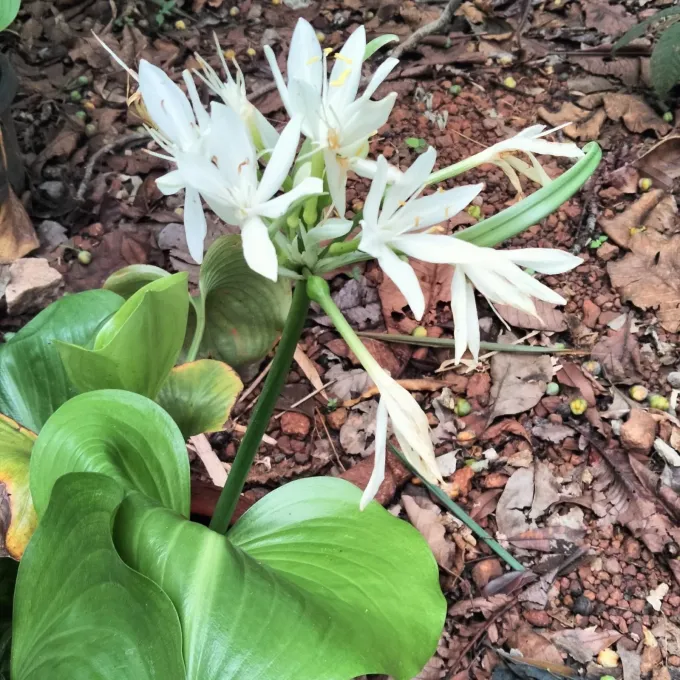
Botanically, this species is characterized by broad, heart-shaped leaves that emerge from a large, fleshy bulb. The inflorescence consists of a cluster of fragrant, white, funnel-shaped flowers that appear on a long, sturdy scape before the full leaf development.
The culture requires a well-draining, rich organic substrate to thrive. In cultivation, it is essential to mimic its natural habitat by providing high humidity, bright but filtered light, and protection from direct midday sun to prevent leaf scorching.
The plant undergoes a distinct vegetative cycle, often entering dormancy after the blooming season. During this phase, watering should be significantly reduced to allow the bulb to rest, which is crucial for successful blooming in the following season.
In terms of economic use, Proiphys amboinensis is highly valued by horticulturists and botanical garden collectors. Its rare aesthetic appeal and graceful flowers make it a sought-after specimen for conservatory displays and high-end indoor plant collections.
Main diseases and pests
The primary concern for growers of Proiphys amboinensis is bulb rot caused by excessive moisture and poorly aerated soils. Maintaining a strict irrigation schedule is vital to prevent the rapid development of fungal pathogens within the bulb tissues.
Pests such as mealybugs and spider mites are frequent invaders in indoor environments where humidity levels fluctuate. These insects feed on the sap of the broad leaves, leading to yellowing, distortion, and potential decline of the plant's health.
Pest management should prioritize the use of systemic insecticides or neem oil-based solutions during early infestation stages. Regular leaf wiping with a soft, damp cloth can help keep the plant free from dust and minor pest colonies.
Fungal diseases are best managed through improved air circulation and the application of copper-based fungicides when necessary. Sterilizing propagation tools and pots is an essential practice to avoid spreading soil-borne diseases.
Proper environmental management is the most effective form of defense for this species. By keeping the plant in optimal conditions with stable temperature and humidity, growers can maintain a robust specimen that is naturally more resistant to common pests.