
Strict haircap moss
Polytrichum strictum
Description
Growing requirements
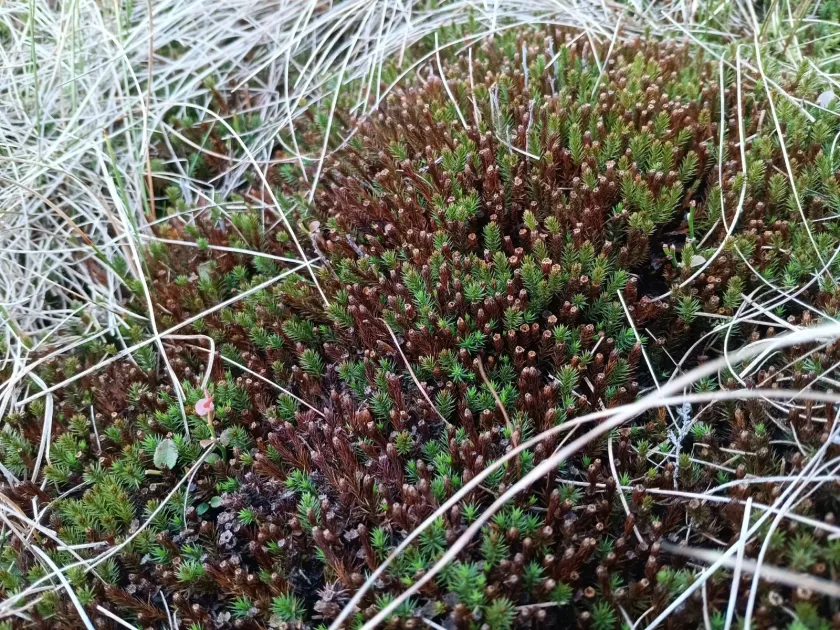
Polytrichum strictum, commonly known as strict haircap moss, belongs to the Polytrichaceae family. It is a perennial moss species playing a vital role in peatland formation throughout the Northern Hemisphere's cold and temperate zones.
This species is highly specialized, thriving in acidic, nutrient-poor, and moisture-rich environments. Unlike vascular crops, its physiological development is entirely dependent on the hydration status of the surface substrate.
The climate requirements for this moss involve high humidity and cold winters. It does not tolerate prolonged exposure to direct sunlight or drying winds, which can desiccate the tightly packed stems within hours.
Soil management for P. strictum implies maintaining extremely low pH levels. In specialized greenhouse or research settings, an artificial peat-based substrate with no mineral fertilization is required to ensure survival and growth.
Botanically, it forms dense, compact turfs that act as a thermal insulator for the ground. This growth pattern is essential for its survival in permafrost and marshland environments, where it helps regulate micro-climate temperatures.
Main diseases and pests
The primary threat to Polytrichum strictum populations is human-induced land drainage. Agriculture and peat mining have significantly reduced the availability of suitable habitats for this sensitive moss species.
Eutrophication caused by agricultural runoff is highly detrimental. Excessive nitrogen loading changes the soil chemistry, allowing invasive species to outcompete the moss and leading to the eventual loss of the colony.
While traditional insect pests are not an issue, fungal pathogens can proliferate in stagnant, overly warm conditions, leading to localized rotting of the moss carpets during peak summer months.
Climate change, specifically the reduction of annual snowfall and increased summer heat, poses a long-term risk by disrupting the moisture balance required for the growth of these mosses.
To prevent decline, agronomists and conservationists focus on hydrological restoration, which involves blocking drainage ditches to re-wet the landscape and protecting the natural buffering capacity of the peat layer.