
Common haircap moss
Polytrichum commune
Description
Growing requirements
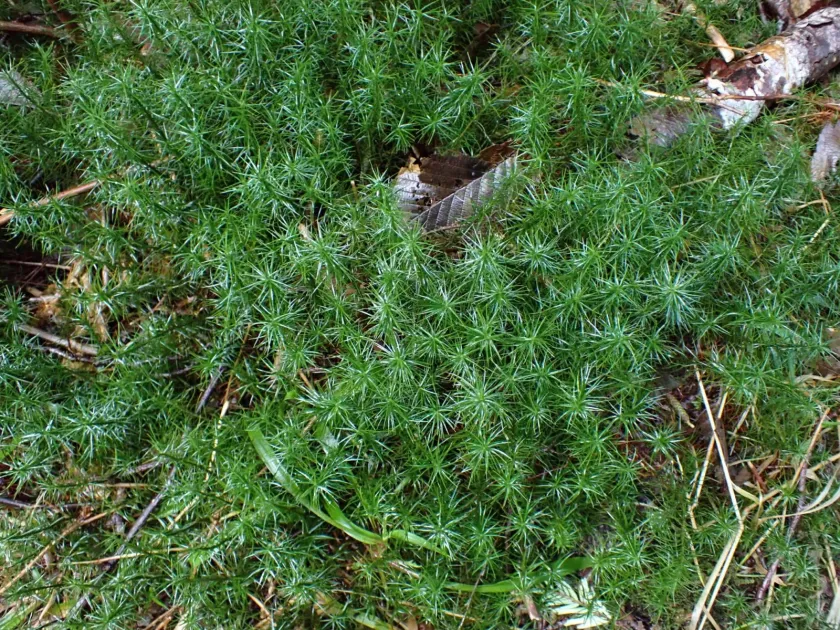
Common haircap moss (Polytrichum commune) is a prominent member of the Polytrichaceae family. This perennial plant is widely distributed across the Northern Hemisphere, forming dense, dark green carpets in humid woodlands, boggy areas, and acidic soil patches.
The plant is biologically unique, featuring a stem-like structure with rudimentary vascular tissues. This allows it to transport water vertically, enabling the moss to grow significantly taller than other bryophytes, often reaching heights of over 30 centimeters in favorable conditions.
Regarding soil requirements, this species acts as a clear indicator of acidic and poorly drained conditions. It thrives in environments with a pH level between 3.5 and 5.0. It is unable to survive in saline or alkaline soils, making its presence a definitive sign of waterlogged landscapes.
Climate plays a critical role in its life cycle. It requires consistent atmospheric moisture and high relative humidity to facilitate reproduction. The moss is highly resilient to cold temperatures, surviving harsh winters under snow cover, but it is extremely sensitive to prolonged heat and drought.
From a land management perspective, it plays a vital role in peat accumulation and soil stabilization. Its dense root-like rhizoids anchor the soil and promote the formation of organic matter, which contributes to the long-term sequestration of carbon in wetland ecosystems.
Main diseases and pests
Polytrichum commune is generally resistant to standard agricultural pests and pathogens. Its acidic cell environment and specialized tissue structure protect it from many insects that target vascular plants, making it a robust survivor in its natural habitat.
The primary threat to this moss is land drainage and irrigation management. As soon as the hydrological balance is altered and the soil is drained, the moss loses its ability to survive, quickly replaced by grasses and other vascular plants that prefer drier soils.
Soil chemical changes represent a major hazard. The application of lime or synthetic fertilizers significantly raises the pH, which is toxic to this acidophilic moss. Increased nitrogen levels specifically promote competitive plants that eventually crowd out the moss species.
Human activities, such as industrial development or intensive logging, can lead to the fragmentation of moss colonies. Because the growth rate of this moss is quite slow, disturbed areas require long recovery periods, often spanning decades to reach maturity.
Pollution from heavy metals and chemical runoff remains a concern in proximity to industrial agricultural zones. Although some species of moss can act as bio-accumulators, extreme concentrations of toxic substances lead to cell death and the collapse of the moss mat integrity.