
Platostoma menthoides
Platostoma menthoides
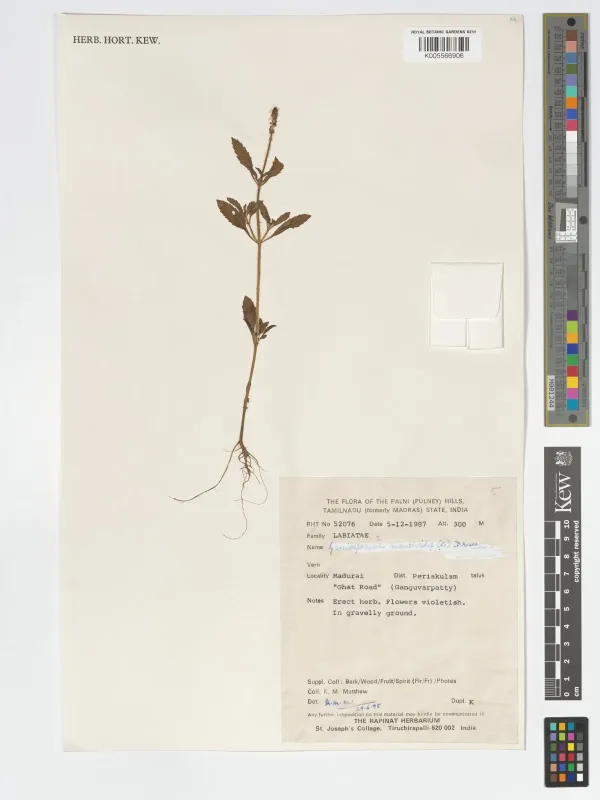
Description
Sowing dates
Platostoma menthoides is an aromatic herb belonging to the Lamiaceae family, known for its distinct scent and potential as an essential oil-bearing crop.
Seeds are extremely small, requiring a shallow sowing depth of no more than 0.5 cm to ensure successful germination and seedling emergence.
In temperate climates, starting seeds indoors in nursery trays or greenhouses is highly recommended to extend the growing season effectively.
Direct seeding in the field should only commence once the soil temperature consistently reaches 15 to 18 degrees Celsius, as the plants are frost-sensitive.
Spacing guidelines involve maintaining rows approximately 30 cm apart, with 15–20 cm between plants, which is optimal for canopy development and airflow.
Growing requirements
This crop thrives in full sunlight, which is crucial for maximizing the development of secondary metabolites and essential oils within the leaf tissues.
Well-drained, fertile loamy or sandy-loam soils are ideal for cultivation, as the roots are susceptible to decay in waterlogged conditions.
Regular irrigation is necessary to support biomass production, especially during periods of active growth, but moisture levels must be monitored carefully.
Soil nutrient management, specifically the application of compost or balanced fertilizers, enhances yield, provided that nitrogen levels are managed to avoid excessive vegetative growth at the expense of oil quality.
Frequent inter-row cultivation is required to manage weed competition, which can significantly stunt the development of young Platostoma plants.
Yield
The economic value of Platostoma menthoides is derived from its foliage, which is harvested and processed for its unique aromatic profile.
Peak essential oil concentration is typically reached at the full flowering stage, making this the optimal window for harvesting to ensure the highest quality raw material.
Yield capacity can be significant under optimal conditions, with the possibility of multiple harvests if the plants are maintained correctly after the initial cut.
The post-harvest process must be conducted with precision, ensuring the cut material is dried quickly in shaded, well-ventilated conditions.
Market demand often focuses on the food processing and fragrance industries, where the purity and scent strength of the dried herb are critical factors.
Main diseases and pests
High humidity and poor planting density can lead to fungal infections, which are the primary pathological threats to this aromatic crop.
Common pests such as aphids and spider mites can cause damage, particularly during periods of heat stress, leading to decreased photosynthetic capacity.
Integrated pest management, including the use of biological control agents and resistant cultural practices, is preferred over chemical interventions.
Crop rotation protocols are essential to prevent the buildup of soil-borne pathogens and to maintain the long-term productivity of the planting site.
Regular field scouting is recommended to identify early signs of pest infestation or disease, allowing for targeted and efficient management strategies.
Harvesting
Harvesting is performed by cutting the aerial portions of the plant, leaving a stubble of about 5–10 cm to facilitate regrowth.
Immediate handling after cutting is vital to prevent the material from heating up, which causes volatile essential oils to dissipate prematurely.
Drying facilities must be optimized for airflow and temperature control, keeping drying temperatures below 40 degrees Celsius to preserve chemical integrity.
Packaged dried products should be kept in a cool, dark, and dry environment to maintain the aroma and flavor profiles during transport and storage.
Proper harvesting techniques not only impact immediate yield but also determine the longevity and vigor of the stand for subsequent harvests.