
Platostoma africanum
Platostoma africanum
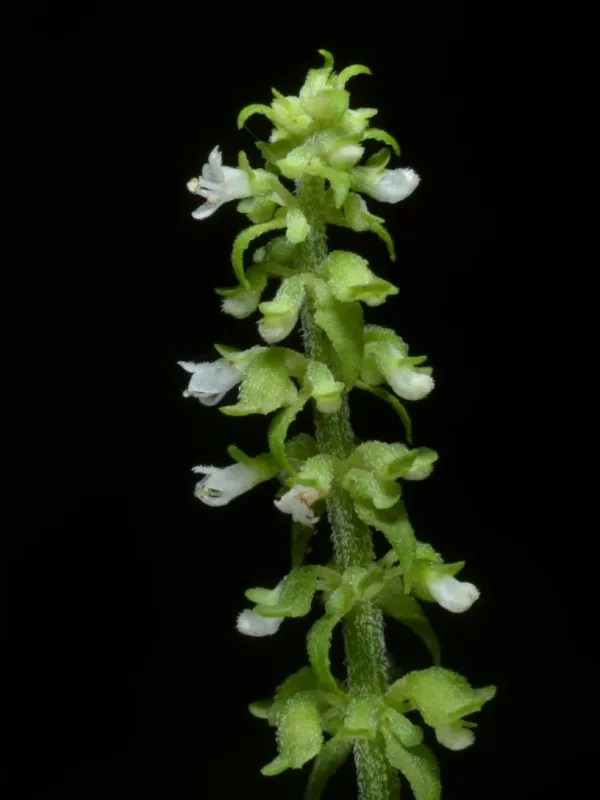
Description
Sowing dates
Platostoma africanum belongs to the Lamiaceae family. It is an aromatic herbaceous plant that serves as a valuable crop for essential oil production in tropical regions.
Seed propagation is typically performed in greenhouses or nurseries, where light exposure is carefully managed to ensure uniform germination rates.
In tropical climates, direct seeding is possible during the onset of the rainy season, allowing the plants to utilize natural moisture for initial establishment.
Correct spacing is vital for large-scale production; maintaining adequate gaps between rows helps in optimizing airflow and sunlight penetration for all plants.
Early-stage weed control is crucial, as the young seedlings require a competition-free environment to develop a robust root system and reach full growth potential.
Growing requirements
This crop thrives in sunny, open locations, as high solar radiation is the key driver for the accumulation of essential oils within the leaf tissues.
Platostoma africanum requires well-drained, fertile soil, ideally sandy loam or loamy soil, with a neutral pH level to ensure optimal nutrient uptake.
Water management is critical; while the plant is drought-tolerant once established, consistent irrigation during dry spells significantly boosts foliage production.
The plant is highly sensitive to cold and frost, meaning commercial production is restricted to tropical and sub-tropical zones without freezing risks.
Applying organic matter during soil preparation enhances moisture retention and provides the essential nutrients required for vigorous vegetative growth throughout the season.
Yield
The harvest focuses on the aerial parts of the plant, including leaves and tender stems, which are harvested to extract essential oils for medicinal and aromatic uses.
Yield capacity is highly dependent on planting density and the quality of agricultural management, including timely pruning to encourage branching.
Multiple harvests per season are possible under optimal conditions, significantly increasing the total output of biomass per unit area of land.
Essential oil yield is influenced by harvest timing, specifically during the early flowering phase when secondary metabolites are most concentrated.
Economic value is driven by the quality and chemical composition of the oil, making precision during harvesting and post-harvest handling essential for profitability.
Main diseases and pests
Root rot is the primary threat to the crop, especially in conditions characterized by excessive soil moisture and poor drainage systems.
Common agricultural pests like aphids can affect the crop, causing stunted growth and reducing the market value of the harvested raw material.
Integrated pest management strategies are recommended to keep pest populations at manageable levels while ensuring the safety of the plant products.
Crop rotation should be implemented to break the life cycle of soil-borne pathogens and maintain high soil fertility for future planting cycles.
Constant monitoring of the fields for early signs of wilting or infestation is necessary to prevent potential damage from spreading throughout the farm.
Harvesting
Harvesting should ideally occur at the beginning of the flowering stage, as this is when the plant displays the highest concentration of active compounds.
Using sharp tools for harvesting ensures minimal damage to the plant structure, which is important for promoting healthy regrowth in multi-harvest systems.
Collected foliage must be moved quickly to drying or processing facilities to preserve the volatile essential oils that give the plant its characteristic aroma.
The drying process should take place in shaded, well-ventilated areas to prevent heat degradation and maintain the quality of the essential oil extract.
Cleaning the field after the final harvest helps reduce the population of overwintering pests and prepares the soil for subsequent agricultural cycles.