
Gold fern
Pityrogramma chrysophylla
Description
Growing requirements
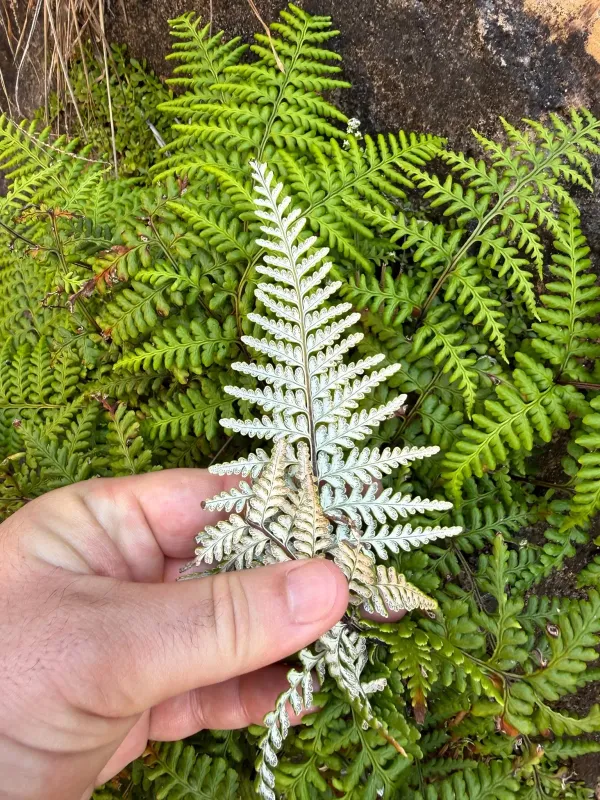
Pityrogramma chrysophylla, commonly known as the gold fern, is a species in the Pteridaceae family. It is native to the tropical regions of the Americas, thriving in humid, shaded habitats such as forest floors and rocky crevices.
This species requires a stable environment with temperatures between 20°C and 25°C. As a tropical plant, it does not tolerate frost or cold drafts, which can cause significant damage to its delicate fronds and overall growth.
The substrate must be well-draining, acidic to neutral, and rich in organic matter. A mix containing peat moss, pine bark, and coarse perlite is ideal for mimicking the natural environment and preventing root compaction.
High humidity levels, ideally above 60%, are crucial for maintaining the health of the plant. Without sufficient ambient moisture, the edges of the fronds will brown and crisp, detracting from the plant's aesthetic value.
Bright, indirect light is necessary for optimal development. Exposure to direct sunlight can damage the fronds and interfere with the production of the golden powder on the undersides of the leaves, which is a signature characteristic of this species.
Main diseases and pests
Spider mites are the most frequent pests affecting the gold fern, especially when the indoor environment is dry. These tiny pests weave webs on the underside of the leaves and cause yellowing and necrosis.
Root rot is a major threat caused by overwatering or poor drainage. Once the roots are compromised, the plant often wilts and fails to recover, making prevention through careful watering practices essential.
- Mealybugs — appear as white, cotton-like masses on stems and leaf undersides.
- Fungus gnats — thrive in damp soil and indicate potential drainage issues.
- Leaf spot diseases — can occur if foliage remains wet for too long without adequate ventilation.
Integrated pest management, including regular inspection and the use of gentle horticultural soaps, is recommended for controlling infestations without harming the plant's delicate tissues.
Maintaining proper air circulation around the plant helps prevent fungal spores from establishing themselves on the fronds. Always remove dead or dying foliage promptly to keep the plant vigorous and disease-free.