
Handroanthus impetiginosus
Handroanthus impetiginosus (Mart. ex DC.) Mattos
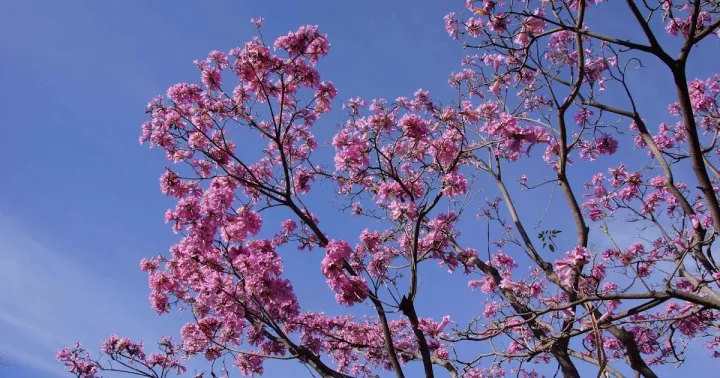
Description
Sowing dates
Handroanthus impetiginosus is typically propagated via seeds in controlled nursery environments. Seeds should be sown immediately after harvesting, as their viability decreases rapidly if stored for long periods.
In tropical regions, sowing occurs at the start of the rainy season, which provides the necessary moisture levels for germination. In protected environments, maintaining temperatures between 25 and 30 degrees Celsius is essential.
Pre-soaking seeds in warm water for several hours is recommended to stimulate the embryo. The seeds should be covered with 1–2 centimeters of light, well-draining soil mix enriched with sand or perlite.
Seedlings require partial shade during their early growth stages to prevent damage from intense solar radiation. A gradual hardening-off process is crucial before transplanting the saplings to their permanent locations.
Optimal planting time is when the climate is consistently warm, ensuring no risk of frost. Under favorable conditions, germination typically occurs within 2 to 4 weeks after the initial sowing.
Growing requirements
As a member of the Bignoniaceae family, this tree is highly photophilous and requires full sun exposure for healthy development. Planting sites must be protected from strong winds to avoid structural damage.
The culture thrives in deep, fertile, and well-drained soils with a neutral or slightly acidic pH. Waterlogging must be strictly avoided, as it leads to root decay and significantly reduces plant vigor.
Climatic requirements focus on high temperatures and a distinct dry season, which is essential to trigger mass blooming. The tree is sensitive to freezing and requires protection in cooler climates.
Regular irrigation is necessary during the active growth phase, although mature trees exhibit excellent drought tolerance. Excessive nitrogen fertilization should be avoided as it can delay flower bud initiation.
Mulching the root zone with organic matter is recommended to maintain moisture levels and suppress weed growth. Proper spacing between trees is vital to ensure adequate air circulation and light distribution.
Yield
The economic value of this tree is derived primarily from its timber and medicinal bark. The bark, widely known as lapacho, is harvested for its pharmacological properties, including antibacterial effects.
The timber of Handroanthus impetiginosus is renowned for its extreme density and durability. It is highly resistant to decay and insect damage, making it a premium material for construction and furniture.
Ornamental use serves as a significant economic driver in tropical landscaping and eco-tourism. The spectacular pink flowering period attracts large numbers of visitors, boosting local economies.
Productivity is contingent upon management practices and environmental suitability. Sustainable harvesting of the bark is essential to ensure long-term viability and to prevent damage to the individual trees.
By implementing professional agroforestry practices, growers can achieve stable yields while maintaining the health of the ecosystem. Balanced nutrition and light management are key to successful production.
##threats##Young trees are often susceptible to leaf-eating insects. Regular scouting is required to detect infestations early and manage pest populations before they cause significant defoliation.
Fungal diseases are a common risk, particularly in high-humidity areas with poor air circulation. Proper spacing and site selection are the best defenses against leaf spots and root infections.
Disease control measures must be handled carefully, especially when the trees are cultivated for medicinal bark production. Biological control agents are preferred over synthetic chemical treatments.
Soil-borne nematodes can pose a threat to plant health in unprepared fields. Soil testing and the use of green manure crops before planting can effectively mitigate nematode populations.
- Sanitary pruning to remove infected branches and improve aeration.
- Monitoring soil drainage to prevent conditions favorable for fungi.
- Implementing crop rotation or fallowing to improve soil health.