
Bitterwood
Picrasma excelsa
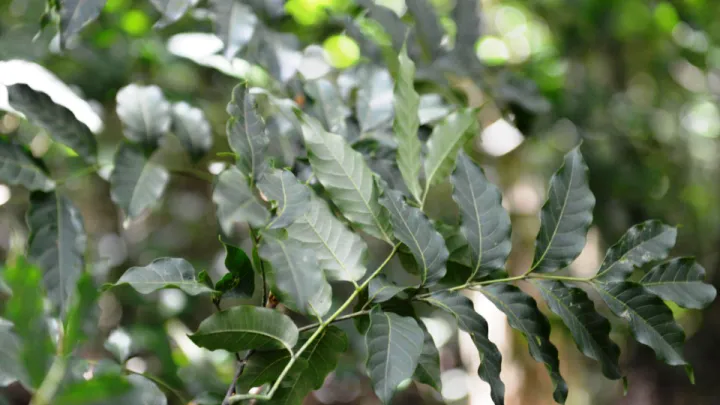
Description
Sowing dates
Bitterwood, scientifically known as Picrasma excelsa, is a tree species primarily propagated through seeds that require specific environmental conditions to germinate successfully.
Seeds often undergo a period of dormancy, and growers recommend mechanical scarification or soaking in water to improve the uniformity of the germination process.
Propagation is typically conducted in nursery beds with high humidity and temperature control to protect the sensitive young sprouts from environmental stresses.
Once seedlings attain a height of about 40–60 cm, they are ready for transplanting into field conditions, usually at the beginning of the rainy season to ensure root establishment.
Proper spacing is crucial to allow the tree to grow into its characteristic shape, ensuring that each specimen receives adequate light and soil nutrients over its long lifecycle.
Growing requirements
As a member of the Simaroubaceae family, Picrasma excelsa is native to the Caribbean and thrives in tropical climates where the temperature remains consistently high.
The tree requires fertile, well-draining soil with a neutral to slightly acidic pH, as it is highly susceptible to root rot in waterlogged or heavy clay-like soil conditions.
It prefers a location with high ambient moisture and partial shade, especially during its younger stages, mimicking the conditions of its natural forest understory habitat.
Wind protection is necessary for developing plantations, as strong winds can cause physical damage to the leaves and brittle young branches of the bitterwood trees.
Consistent maintenance, including clearing surrounding weeds, is essential to reduce competition for resources and to promote steady growth rates in the early years.
Yield
The primary economic value of the bitterwood lies in its bark and wood, which are significant sources of quassin, a potent bitter compound with various medicinal uses.
Quassin is widely extracted for its anti-malarial, stomachic, and insecticidal properties, making the tree an important commodity in the pharmaceutical and agricultural sectors.
A typical harvest cycle spans over a decade, with trees reaching peak production of active compounds only after reaching a mature and healthy developmental stage.
Sustainable harvesting techniques allow for long-term productivity, as cultivators selectively harvest bark or branches rather than removing the entire tree from the site.
Yield estimation is highly dependent on the tree's health, site fertility, and local climatic stability throughout its long-term growth and maturation process.
Main diseases and pests
The main biological threats include fungal pathogens that exploit high-humidity environments, potentially causing bark rot or leaf spotting if air circulation is insufficient.
Termites and certain wood-boring insects can become a concern in mature plantations, requiring regular monitoring and integrated pest management to prevent significant damage.
In cases of poor site selection, the trees are vulnerable to nutrient deficiencies, which manifest as chlorosis or stunted growth, eventually weakening the tree's immune system.
Prevention involves regular sanitary pruning of dead or diseased branches to maintain the tree's overall vigor and to ensure proper airflow within the canopy.
Since the wood is used for medicinal extractions, cultivators prefer organic methods of control to ensure the final product meets high purity standards.
Harvesting
Harvesting is a skilled operation that involves stripping the bark or harvesting specific branches during the dry season to minimize the risk of fungal infections.
The collected bark must be processed immediately by drying it in shaded, well-ventilated areas to prevent the degradation of heat-sensitive compounds.
Properly dried material is then pulverized to create a uniform powder or chip size, facilitating more efficient extraction of active substances in subsequent industrial processes.
Cleanliness during the harvesting and processing phases is paramount to prevent contamination with soil particles or foreign botanical material that could compromise the product quality.
Finally, the processed bitterwood products are stored in humidity-controlled environments to maintain their potency and prevent the development of mold or decay.