
Late blight
Phytophthora de Bary
Description
Main diseases and pests
Late blight, caused by the oomycete Phytophthora infestans, is a devastating disease affecting essential agricultural crops, most notably potatoes and tomatoes. Although not a cultivated crop, it remains the primary biological constraint in global potato production, requiring constant monitoring by agronomists.
Originating from the central highlands of Mexico, this pathogen has spread globally, successfully adapting to diverse agricultural environments. Its historical impact, notably the Irish Potato Famine, underscores the vulnerability of monocultures to this aggressive biological agent.
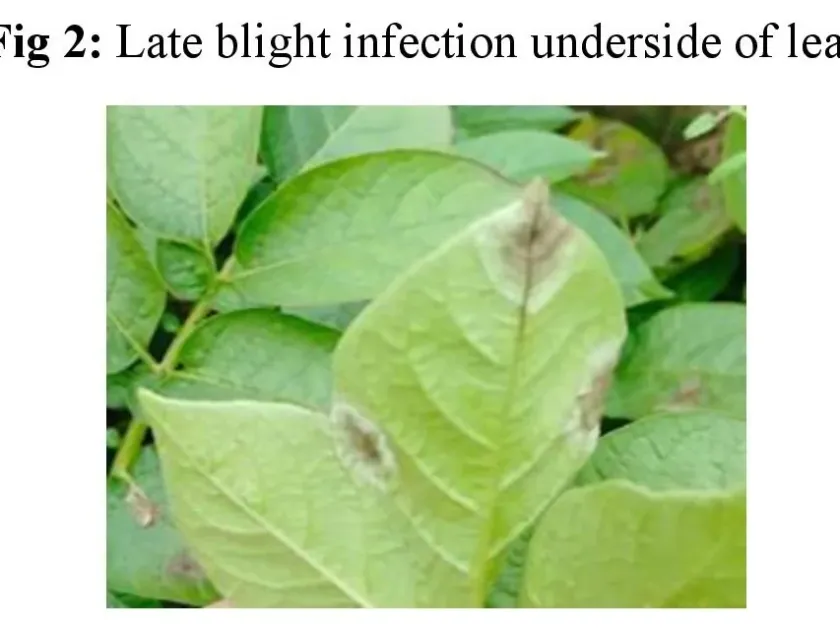
Biologically, the organism thrives through the production of sporangia, which function as both direct spores and containers for motile zoospores. These structures enable the pathogen to exploit moisture films on plant surfaces to infect tissues rapidly, leading to the characteristic necrotic lesions on foliage and tubers.
Environmental requirements for an epidemic include high relative humidity and temperatures between 15 and 25 degrees Celsius. In these conditions, the pathogen completes its life cycle in a matter of days, leading to exponential growth and severe crop degradation if left untreated.
Management strategies are centered on integrated pest management (IPM) practices. Growers rely on a combination of chemical control, crop rotation, and the selection of blight-resistant cultivars. Proper irrigation management is also essential to reduce leaf wetness duration and limit the pathogen's ability to propagate.