
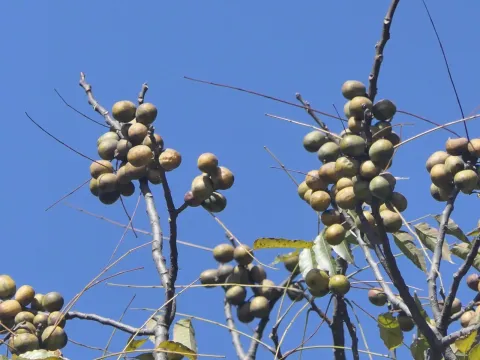
Choerospondias
Choerospondias B. L. Burtt & A. W. Hill
Choerospondias (Choerospondias axillaris) is a deciduous fruit tree belonging to the Anacardiaceae family. It is native to temperate and subtropical regions of East and South Asia, including China and Nepal.
What the section contains

Choerospondias
The tree thrives in climates with distinct seasonal changes and moderate rainfall. It requires a sunny location to maximize fruit production, although it can tolerate partial shade in its early development stages.
Soil quality is crucial for the optimal growth of this species. It prefers deep, well-drained, fertile soils with a slightly acidic to neutral pH. It is highly intolerant of waterlogged conditions, which can cause root decay.
Temperature management is important; while the tree can withstand short periods of cold, it should be protected from harsh frosts, especially when the tree is young. Proper wind protection is also advised to maintain the structural integrity of the canopy.
Standard agrotechnical practices for this crop include periodic pruning to shape the canopy and stimulate fruiting, alongside balanced fertilization to support vigorous annual growth.
Choerospondias is primarily cultivated for its drupe-like fruits, which are highly valued for their nutritional profile. The fruit has a tangy, sweet-sour flavor that makes it popular in various culinary applications.
In food processing, the fruit is widely used to produce jams, jellies, juices, and fermented beverages. The pulp can also be dried to create healthy snacks or preserved for long-term storage.
The wood of the tree is highly regarded for its strength and durability. It serves as an excellent resource for carpentry, furniture making, and construction, providing dual economic value to farmers.
Yield capacity is significant; a mature, well-maintained tree can produce a substantial harvest of fruits annually, making it a viable commercial crop in suitable subtropical regions.
Recent interest in natural antioxidants has highlighted the potential of this fruit in the health supplement market, increasing demand for standardized agricultural production and cultivation techniques.
The main threats to Choerospondias production include fungal infections that affect the foliage and bark, typically triggered by prolonged humidity. Improving airflow through systematic pruning is a primary preventative measure.
Insect pests, such as fruit borers, can significantly impact crop quality. Integrated Pest Management (IPM) strategies, including the use of pheromone traps, are recommended to control these populations efficiently.
Root rot caused by poor soil drainage remains a major risk. Ensuring correct irrigation schedules and soil amendment with organic matter helps maintain healthy, resistant root systems.
Bacterial blight can occur in dense plantings. To manage this, it is essential to monitor trees regularly and remove any infected branches immediately to prevent the spread of the pathogen throughout the orchard.
During the fruit development stage, protection from severe weather is necessary. Providing shelter or windbreaks reduces physical damage to the developing fruits, ensuring higher marketable yields at harvest time.
Harvesting Choerospondias is typically performed manually when the fruits achieve their characteristic size and color. Timing is essential as the fruits should be picked before they become overripe.
Care must be taken during the harvest to prevent bruising. The fruit's skin is relatively delicate, and mechanical damage can lead to rapid post-harvest degradation and reduced shelf life.
Immediate post-harvest cooling is recommended to stabilize the produce. This process reduces respiration rates and preserves the nutritional quality of the fruit for distribution to local and regional markets.
Sorting by maturity level allows for better logistical planning. Ripe fruits are prioritized for fresh consumption, while firmer or slightly damaged fruits are channeled directly to processing facilities.
Proper ventilation during transport and storage is critical to prevent fermentation. Using crates that allow for consistent airflow is the industry standard for transporting these fruits to ensure freshness upon arrival.