
Photinia serratifolia
Photinia serratifolia (Desf.) Kalkman
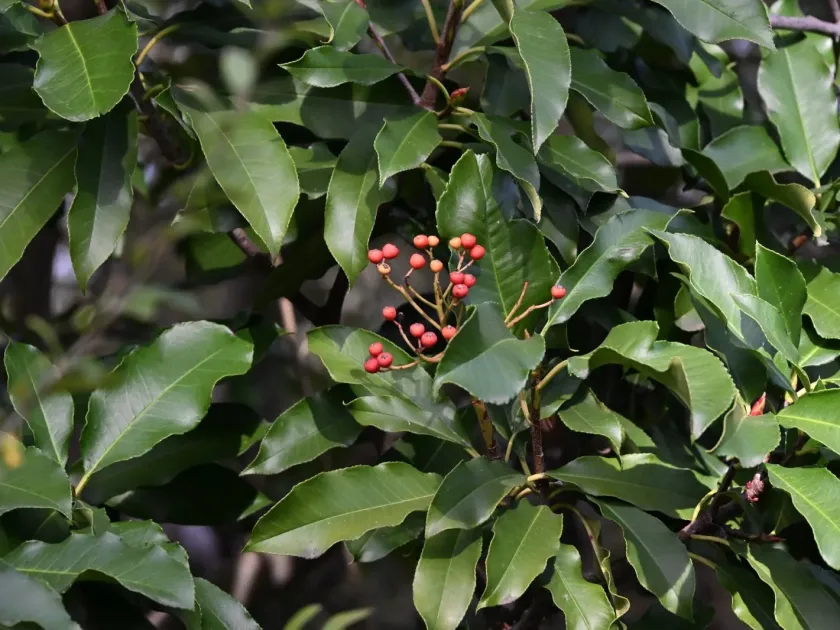
Description
Growing requirements
Photinia serratifolia is a prominent member of the Rosaceae family, widely recognized for its evergreen foliage and ornamental value. Originating from China and other parts of East Asia, it thrives in regions with mild temperate to subtropical climates.
The plant features distinctively serrated, glossy leaves that transition from a vibrant copper-red in the spring to a deep, lustrous green as they mature. This seasonal color change makes it a popular choice for high-end landscape design and garden architecture.
When selecting a site, it is crucial to provide well-drained, fertile soil with a slightly acidic to neutral pH. Proper soil structure is essential, as the roots are sensitive to waterlogging, which often leads to root rot in poorly managed environments.
Climate requirements include protection from harsh, drying winds and extreme frost. While the plant is hardy in many zones, young specimens require mulch and windbreaks during the winter months to protect their root systems and young branches.
Annual maintenance is centered around pruning, which encourages the development of new red growth. Proper light exposure is also vital; while it tolerates partial shade, full sun is required to maximize the intensity of its signature red spring foliage.
Main diseases and pests
The most significant pathological threat to Photinia serratifolia is leaf spot, caused by the fungus Entomosporium. This disease manifests as small, dark spots that eventually enlarge, causing premature leaf drop and reducing the plant's overall aesthetic appeal.
Powdery mildew represents another frequent issue, particularly in late spring or autumn when humidity levels are high. It appears as a white, powdery coating on leaves and stems, and can be mitigated by ensuring proper air circulation through regular thinning of the canopy.
Pest pressures include scale insects and aphids, which feed on the sap of tender new growth. Infestations should be managed immediately using horticultural oils or systemic insecticides to prevent damage to the plant's structural integrity.
To ensure disease resistance, gardeners should practice good sanitation by removing and disposing of any fallen leaves beneath the shrub. This prevents fungal spores from overwintering and reinfecting the plant during the next growing season.
Monitoring the plant for signs of stress is critical, as weakened plants are more susceptible to secondary infections. Regular fertilization and watering during dry spells help maintain the vigor needed for the plant to defend itself against common pests.