
Philenoptera nelsii
Philenoptera nelsii
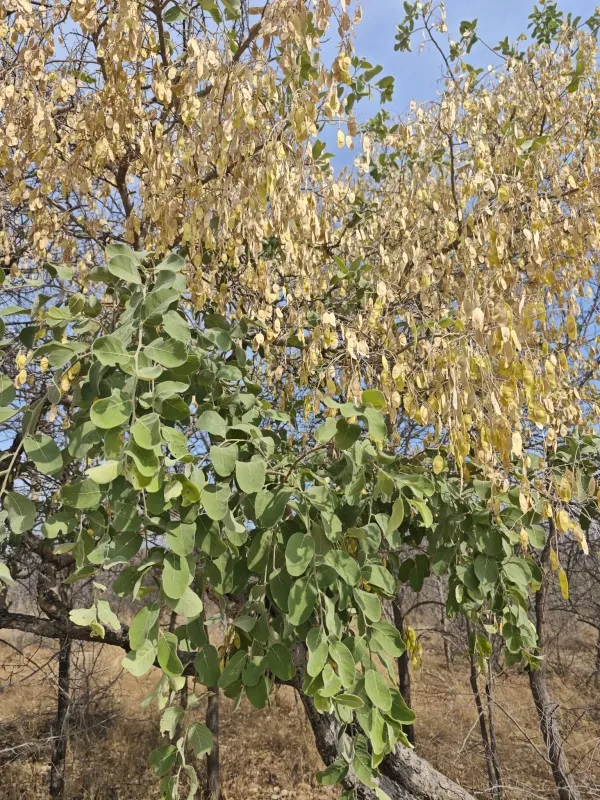
Description
Sowing dates
Propagation of Philenoptera nelsii is typically achieved through seeds, which require mechanical or chemical scarification due to their thick protective coating.
In their native range, planting is ideally timed with the onset of the rainy season to ensure sufficient moisture for seedling establishment.
When starting in nursery conditions, it is crucial to use a well-draining soil mix to prevent the rotting of the sensitive embryonic roots.
Optimal germination occurs when temperatures are maintained between 22 and 27 degrees Celsius, providing the necessary heat for consistent growth.
Seedlings should be moved to their permanent location once they develop a robust root system and reach a height of at least 30 centimeters.
Growing requirements
Belonging to the Fabaceae family, Philenoptera nelsii is a tree species that has evolved to survive in the arid environments of Southern Africa.
The plant requires full sun exposure for optimal development, as shaded environments often result in stunted growth and poor wood density.
It prefers deep, well-drained soil types, such as sandy loams, and is highly intolerant of waterlogged conditions that lead to root rot.
As a legume, it possesses the natural ability to fix atmospheric nitrogen, which allows it to thrive in nutrient-poor soils common in its range.
Adequate spacing between individual trees is necessary to minimize competition for soil nutrients and sunlight as the trees reach maturity.
Yield
The primary economic output of this culture is its high-quality, dense wood, which is utilized for traditional woodworking and artisan crafts.
The durability of the timber makes it suitable for outdoor applications, provided it is treated and managed using sustainable harvesting methods.
Besides wood, the tree serves as an important component of agroforestry systems, contributing to soil stability and shade for understory plants.
Growth rates are generally moderate, with yields of biomass being heavily influenced by annual rainfall patterns and soil moisture retention.
Sustainable land management ensures that the harvest of timber does not negatively impact the long-term viability of the plant population.
Main diseases and pests
The species is susceptible to various wood-boring insects and pests that target the bark and foliage, particularly during dry seasons.
Fungal pathogens can emerge if the environment becomes overly humid without adequate airflow, leading to leaf drop and decreased vigor.
Small mammals and rodents often pose a threat to young seedlings by stripping bark or consuming the terminal buds during early development.
In certain areas, seed predation by beetles significantly reduces natural regeneration, necessitating protective measures in nursery settings.
- Routine inspection of bark for signs of borer holes.
- Proper pruning to improve air circulation within the canopy.
- Clearing debris around the base to deter rodents.