
Philenoptera cyanescens
Philenoptera cyanescens
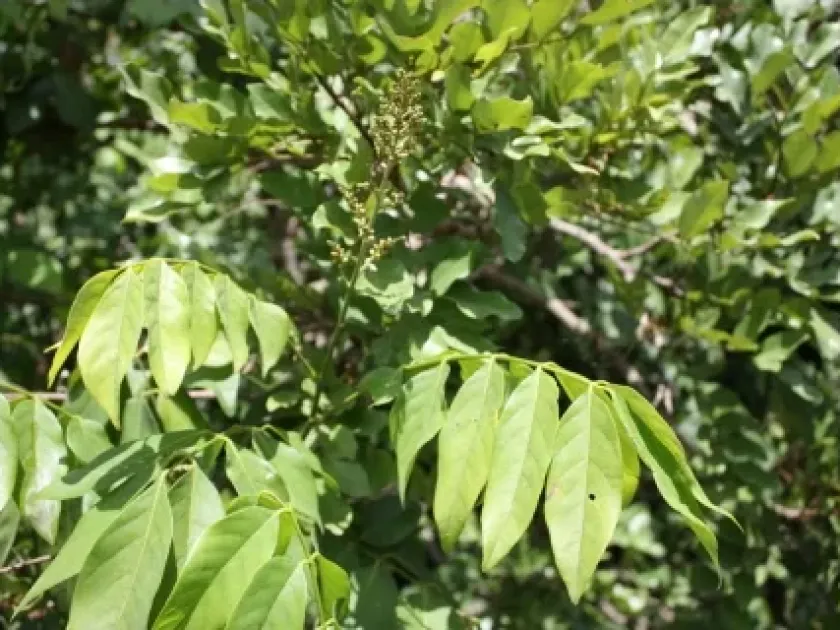
Description
Sowing dates
The planting of Philenoptera cyanescens typically aligns with the onset of the rainy season, which is essential for successful seed germination and initial seedling establishment.
Seeds are sown in well-prepared, loose soil at a depth of 2-3 cm, ensuring adequate spacing to allow each plant sufficient room to develop its canopy.
Seed scarification is often recommended to overcome the physical dormancy of the seed coat, thereby increasing the rate of germination in nursery conditions.
Strategic site selection is vital, as the crop requires full sun exposure to trigger optimal growth and synthesize the compounds responsible for its dyeing properties.
In organized farming, seeds may be pre-germinated in containers before transplanting to the field to ensure a uniform plant population across the plot.
Growing requirements
Philenoptera cyanescens, a member of the Fabaceae family, thrives in well-drained, fertile sandy loam or loamy soils with a slightly acidic to neutral pH level.
As a tropical plant, it demands consistent warmth and is sensitive to frost and cold snaps, requiring mean temperatures between 22 and 30 degrees Celsius for peak performance.
While the plant exhibits moderate drought tolerance once established, supplemental irrigation during prolonged dry spells is necessary to maintain high biomass production.
The soil should be rich in organic matter, and the application of compost or green manure is highly beneficial for improving soil structure and nutrient availability.
Open, wind-protected areas are preferred to prevent mechanical damage to the foliage, which is the primary economic component of the plant.
Yield
Yield estimation for Philenoptera cyanescens focuses on the total mass of fresh leaves harvested per hectare throughout the growing season.
Under optimal conditions and regular pruning, a plantation can yield multiple harvests annually, providing a consistent supply of leaf material.
The peak biomass productivity is usually achieved once the shrub reaches maturity, typically between three to four years after initial planting.
Yield quality is highly dependent on the plant's health and the frequency of harvests, as overly frequent cutting can stress the plant and reduce long-term vitality.
Agricultural techniques such as thinning and controlled fertilization significantly influence the final output of the leaf material used for pigment extraction.
Main diseases and pests
Leaf-eating insects, particularly certain types of caterpillars and beetles, pose the greatest threat to the foliage and can lead to significant yield losses if left uncontrolled.
Root rot caused by waterlogged conditions is a common pathology, necessitating proper drainage and careful irrigation management to prevent plant death.
Fungal leaf spot diseases can become prevalent in high-humidity environments, leading to premature leaf drop and a decrease in the quality of the harvested product.
Invasive weeds can compete for nutrients and light in the early growth stages, making timely weeding a necessary part of the management routine.
- Root rot pathogens due to poor soil drainage.
- Defoliating insect infestations.
- Fungal spot diseases in humid conditions.
Harvesting
The harvest involves the manual collection of fresh, green leaves, which are usually gathered from the younger, actively growing branches of the shrub.
Harvesting is best performed in the early morning to minimize moisture loss and preserve the chemical integrity of the pigment precursors within the leaf tissue.
After collection, the leaves must be cleaned of debris and stems to ensure that only the highest quality material proceeds to the extraction or fermentation phase.
Post-harvest handling is critical, as leaf fermentation should ideally begin shortly after harvest to prevent degradation and loss of color potential.
Successive harvesting cycles are scheduled based on the regrowth rate of the plant, ensuring the shrub remains productive over multiple seasons.