
Phaleria macrocarpa
Phaleria macrocarpa
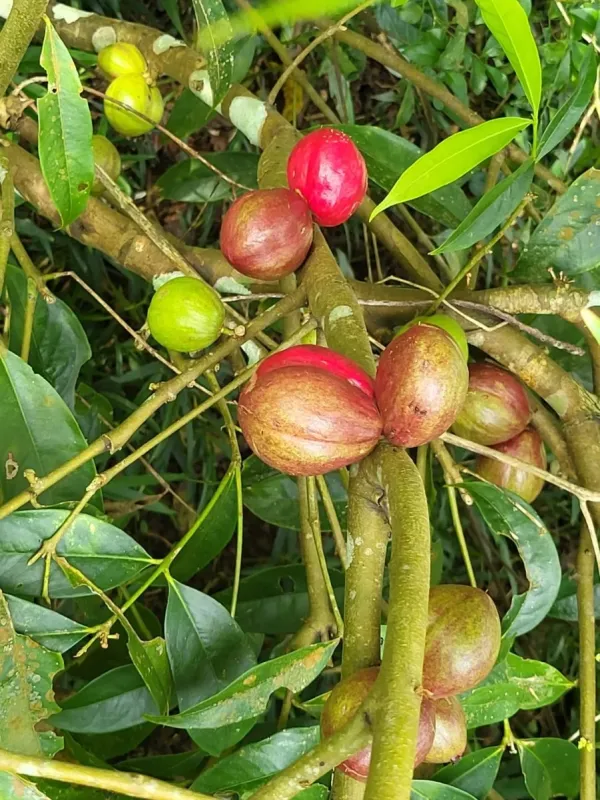
Description
Growing requirements
Phaleria macrocarpa, colloquially known as 'God's crown' or 'Mahkota Dewa', is an evergreen shrub or small tree belonging to the Thymelaeaceae botanical family.
The plant is native to the rainforests of Indonesia and Malaysia, thriving in hot and humid tropical conditions with consistent rainfall throughout the year.
For optimal growth, it requires deep, fertile, and well-draining soil with a slightly acidic pH, typically ranging from 5.5 to 6.5 for nutrient availability.
In agricultural settings, the plant is usually cultivated in areas with dappled sunlight or moderate shade, mimicking the lower canopy environment of its natural habitat.
Standard cultivation practices involve regular application of organic matter to maintain soil moisture levels and periodic pruning to encourage a bushy, productive structure.
Yield
Phaleria macrocarpa is primarily cultivated for its medicinal fruit, which contains active phytochemical compounds including flavonoids, saponins, and alkaloids.
These compounds are recognized for their antioxidant and anti-inflammatory properties, making the fruit a valuable commodity in the nutraceutical industry.
Mature plants begin to produce fruit after three to four years, and if environmental conditions are favorable, they can yield fruit throughout the year.
The harvesting process requires careful handling, as the fruits are typically gathered manually when they reach a deep red or purple coloration.
Post-harvest processing involves slicing and drying the fruit to preserve the bioactive constituents, which are subsequently used in teas, extracts, or herbal supplements.
Main diseases and pests
The plant is susceptible to various fungal pathogens, especially if soil aeration is poor or if the irrigation cycle leads to standing water around the roots.
Leaf blight and root rot are significant concerns for commercial growers, potentially leading to rapid plant decline if not detected and treated early.
Insect pests, including mealybugs, scale insects, and mites, often attack the foliage and stems, utilizing the plant's sap for nutrition.
Integrated pest management (IPM) strategies, such as biological control agents and pruning infected sections, are essential to maintain plantation health.
Preventative maintenance, including proper spacing and maintaining optimal humidity levels, is crucial to discourage pest outbreaks and fungal development.