
Phaleria clerodendron
Phaleria clerodendron
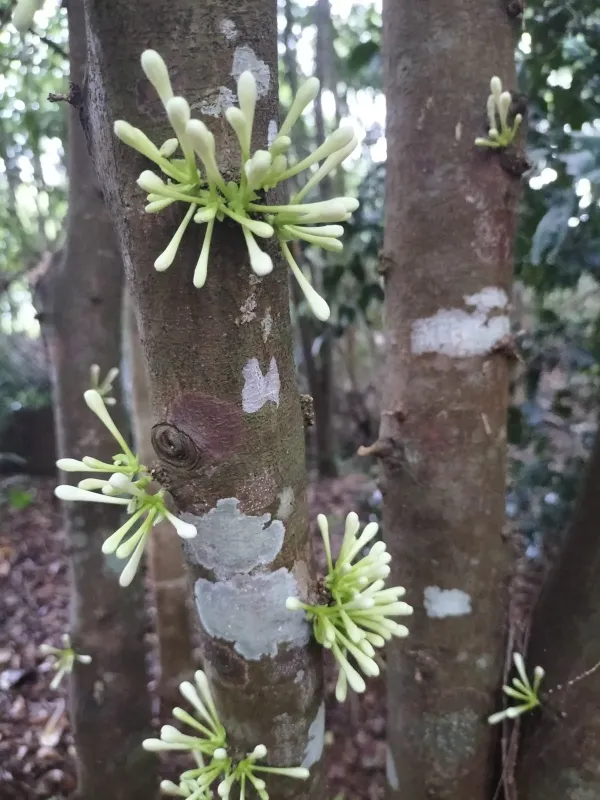
Description
Growing requirements
Phaleria clerodendron is an evergreen tree belonging to the Thymelaeaceae family. Endemic to the tropical rainforests of Queensland, Australia, this species is noted for its distinctive growth habits and biological structure.
The cultivation of this plant requires deep, well-draining, and nutrient-rich soils. It is essential to maintain a substrate with high organic matter content to simulate the natural forest floor conditions where the plant thrives in its native habitat.
Climatic requirements focus on tropical stability; the plant needs high humidity levels and a consistent temperature range between 20°C and 30°C. Phaleria is not cold-hardy and should be kept away from freezing temperatures at all costs.
Botanically, it is classified as a cauliflorous plant, producing highly fragrant white flowers directly on the bark of the trunk and branches. Following successful pollination, it develops decorative red fruit, which serves as a key identifier for the species.
In terms of хозяйственное использование, this plant is primarily valued as a specimen tree in tropical horticulture. Beyond its ornamental use, ongoing research evaluates its potential for bioactive compounds in traditional medicinal contexts.
Main diseases and pests
Common pests affecting Phaleria clerodendron include scale insects and mealybugs, which tend to infest the trunk and the undersides of leaves. Early detection is crucial to prevent these pests from spreading throughout the canopy.
Root rot, induced by waterlogging or poor drainage, remains the primary threat to this plant. Excessive moisture prevents root respiration, leading to the rapid decay of the root system and eventual plant death.
Leaf spot diseases, often caused by fungal pathogens, may occur in environments with poor air circulation and high stagnant humidity. Maintaining adequate space between plants and promoting good airflow is a standard preventative measure.
For pest management, integrated pest control strategies are recommended, including the application of horticultural oils or systemic insecticides when infestation levels exceed acceptable thresholds.
Strategic care involves keeping the plant in a stable environment. Avoiding erratic watering patterns and ensuring the substrate allows for thorough drainage will mitigate the vast majority of disease-related risks to this crop.