
Phalaenopsis schilleriana
Phalaenopsis schilleriana
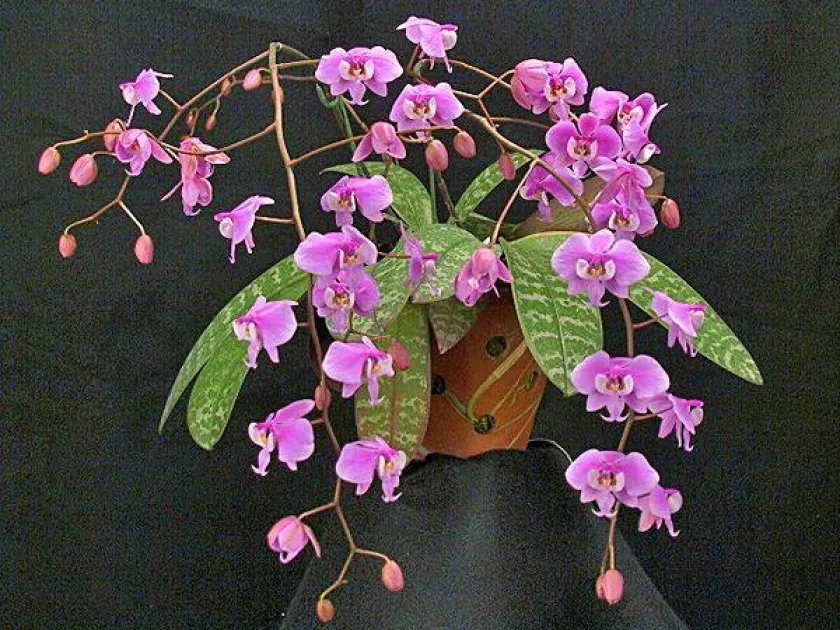
Description
Growing requirements
Phalaenopsis schilleriana is a distinguished member of the Orchidaceae family, highly valued for its striking foliage and cascading floral displays. As an epiphytic species native to the Philippines, it naturally thrives on tropical trees, requiring specific environmental conditions that mimic its wild habitat in a cultivated setting.
Light management is a critical factor in the production of this culture. Plants should be provided with bright, filtered light, typically ranging from 1,500 to 2,500 foot-candles. Excessive direct sunlight can trigger physiological damage to the leaves, while insufficient light leads to poor vegetative development and lack of flowering response.
Temperature control is essential for maintaining plant vigor. Ideal growth temperatures fall between 22°C and 28°C during the day, with a necessary drop to 16°C-18°C at night. This nocturnal temperature drop is a vital trigger for the plant's biological clock, essential for successful floral spike initiation and sustainable productivity.
The choice of substrate is fundamental, as Phalaenopsis schilleriana roots are highly sensitive to oxygen levels. A coarse, airy substrate consisting of high-quality bark, charcoal, and sphagnum moss is recommended to ensure adequate drainage and aeration. Compact or degraded media should be replaced periodically to prevent root hypoxia.
Relative humidity levels between 60% and 80% are required for optimal physiological function. In a commercial environment, consistent humidity is maintained through irrigation automation and environmental control systems. Proper air circulation is just as critical as humidity, preventing the stagnant microclimate that fosters disease outbreaks.
Main diseases and pests
Pathogenic fungi pose the most significant risk to crop health, particularly under suboptimal moisture conditions. Root and crown rots, often induced by species of Fusarium and Pythium, can rapidly destroy the root system. Proper sanitation and the use of sterile tools are the primary lines of defense against these infections.
Insect pests, such as spider mites and mealybugs, are frequent threats to cultivation. These pests thrive in warm, stable environments and can proliferate quickly if not checked. Integrated Pest Management (IPM) practices, including biological control or targeted pesticide applications, are necessary for maintaining crop quality.
Bacterial soft rot, characterized by rapid tissue decay, is a severe threat during high-temperature and high-humidity periods. It often manifests as water-soaked lesions that spread quickly across the foliage. Immediate isolation of affected plants and strict control of humidity are necessary to prevent further transmission.
Nutrient toxicity, resulting from high fertilizer salt concentration, can cause long-term damage to the plant's root system. Regularly flushing the potting media with fresh water is a best practice to mitigate salt accumulation. Using a balanced, orchid-specific fertilizer with a micronutrient profile is recommended for sustained development.
Environmental stress, such as chronic exposure to temperatures outside the ideal range or poor water quality, makes the plant susceptible to opportunistic pathogens. A holistic approach, focusing on maintaining optimal environmental parameters, is the most effective strategy for ensuring the long-term health of this sensitive orchid species.