
Phalaenopsis lueddemanniana
Phalaenopsis lueddemanniana
Description
Growing requirements
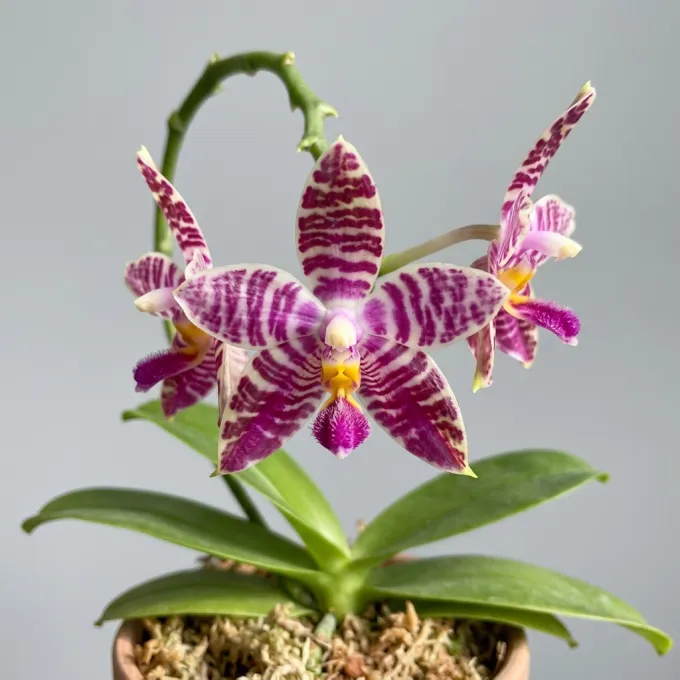
Phalaenopsis lueddemanniana is a prominent species of epiphytic orchid within the Orchidaceae family. Native to the tropical rainforests of the Philippines, it naturally colonizes tree trunks and branches, utilizing its aerial roots to absorb moisture and nutrients from the environment.
In terms of climate, this crop demands high atmospheric humidity levels, ideally ranging between 60% and 80%. Maintaining consistent temperatures between 22°C and 28°C during the day is essential, alongside a distinct night-time drop to encourage healthy physiological activity.
The substrate requirement for this species is unique, as it requires excellent drainage and aeration. A mix of pine bark, charcoal, and sphagnum moss is recommended to ensure that the root system receives sufficient oxygen while preventing stagnant moisture that can lead to rot.
Lighting should be bright but filtered. Phalaenopsis lueddemanniana is sensitive to direct sunlight, which causes scorching on the leaves. Providing diffused light, approximately 15,000–20,000 lux, mimics the understory habitat of its native tropical environment.
Proper airflow is as vital as watering. Ensuring constant ventilation around the root zone and foliage prevents the accumulation of humidity, which could otherwise foster pathogens, particularly in indoor or greenhouse settings.
Main diseases and pests
The primary threats to Phalaenopsis lueddemanniana are fungal infections such as root rot and stem rot, often triggered by overwatering or poor drainage. These pathogens can destroy the plant systemically if not addressed immediately upon detection.
Insect pests, including spider mites, scale insects, and mealybugs, are frequent challenges. These organisms feed on plant sap, weakening the orchid's vitality and creating entry points for viral or bacterial pathogens.
Integrated Pest Management (IPM) is the most effective approach for this crop. This involves regular monitoring, manual removal of pests, and the judicious use of pesticides or acaricides when infestation thresholds are exceeded.
Sanitation practices are essential for preventing the spread of diseases. Sterilizing cutting tools after each use and quarantining new specimens before introducing them to the main collection significantly lowers the risk of large-scale contamination.
Applying fungicides or bactericides should be done with caution, following manufacturer guidelines, as orchids can be sensitive to certain chemical concentrations, especially during the flowering stage.