
Pfeiffera monacantha
Pfeiffera monacantha
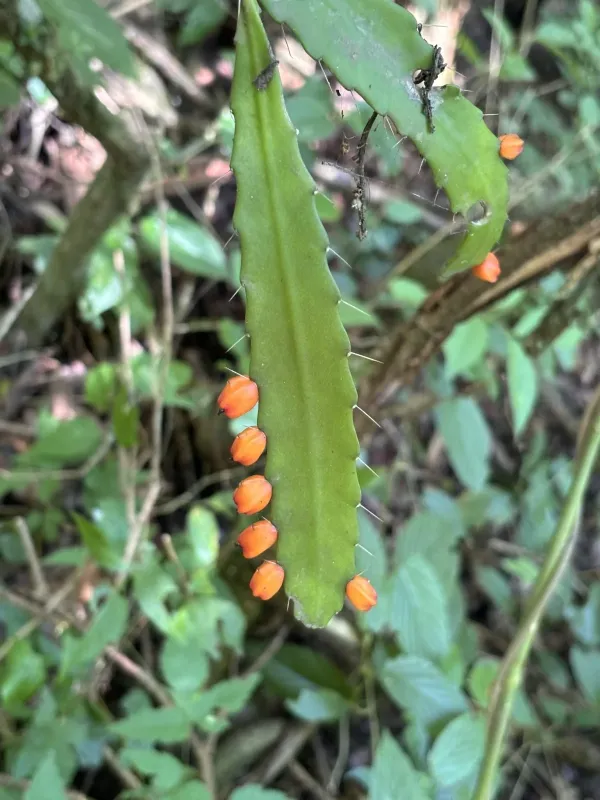
Description
Growing requirements
Pfeiffera monacantha is a distinctive epiphytic cactus belonging to the Cactaceae family. Native to the tropical and subtropical forests of South America, this plant is naturally adapted to growth on trees and cliff sides in high-humidity environments.
In cultivation, this species thrives in bright, indirect light. Unlike desert cacti, it is sensitive to intense midday sun, which can dehydrate its thin stems and cause structural damage; therefore, partial shade is strongly recommended for greenhouse management.
The ideal growing medium for this epiphyte must be porous and well-draining. A mix consisting of orchid bark, peat, and perlite provides the necessary aeration that the sensitive root system requires to prevent suffocation and decay.
Temperature management is critical for this species. It prefers a temperate climate ranging from 20°C to 25°C during the growing season. A cooler period during winter months is essential to simulate its natural habitat and promote future blooming.
Watering protocols should focus on maintaining consistent moisture without causing waterlogging. It is vital to use soft water, preferably at room temperature, and to allow the top layer of the substrate to dry slightly before the next irrigation cycle.
Main diseases and pests
Mealybugs are the most common pest associated with Pfeiffera monacantha, often hiding in the crevices between stem segments. Regular monitoring is necessary to prevent infestations that can stunt growth and weaken the plant.
Root rot is the most serious threat to this species, usually caused by improper soil drainage or excessive irrigation during the dormant period. Once the root system is compromised, the infection quickly moves up into the stem tissue.
Fungal leaf spot diseases may occur in poorly ventilated environments. Maintaining adequate airflow around the plants and avoiding overhead watering can significantly reduce the risk of pathogen colonization on the epidermis.
Chemical control should be approached with caution, as succulents can be sensitive to certain concentrated pesticides. It is preferable to use diluted solutions or systemic products recommended specifically for cactus and succulent species.
Effective management includes maintaining a clean growing area and isolating new specimens to prevent the potential introduction of pests or diseases into an established collection.