
Henderson's rock spiraea
Petrophytum hendersonii
Description
Growing requirements
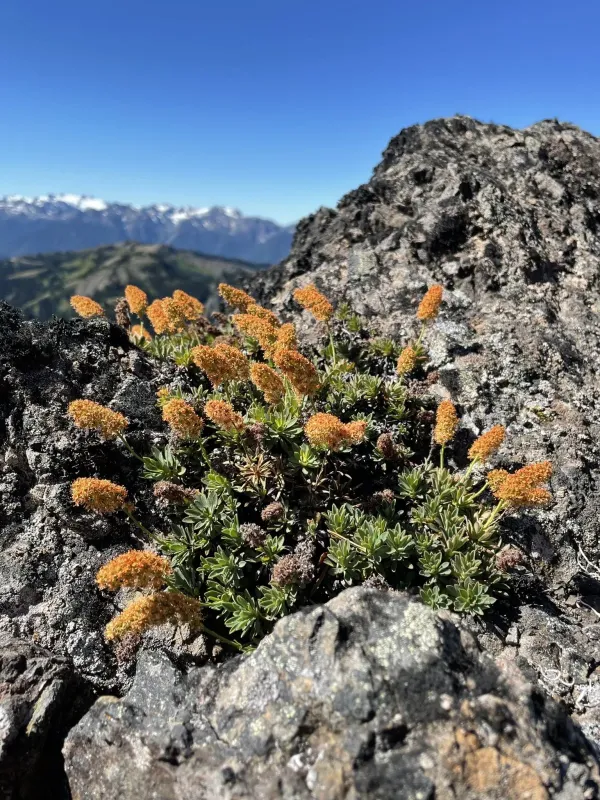
Henderson's rock spiraea (Petrophytum hendersonii) is a perennial semi-shrub belonging to the Rosaceae family. It is a slow-growing plant native to the rocky alpine slopes of the Cascade Range in North America, where it thrives in extreme, nutrient-poor conditions.
The botanical structure of the plant consists of dense, mat-forming rosettes. The leaves are evergreen, leathery, and arranged in tight clusters, allowing the plant to hug the surface of rocks and tolerate wind and cold effectively.
Successful cultivation requires soil conditions that mimic its natural habitat. A gritty, sharply-drained substrate is essential; a mix of coarse sand, gravel, and minimal organic matter is ideal for preventing root rot and ensuring long-term health.
The species prefers a cool, sunny position with excellent air circulation. While it is hardy in cold climates, gardeners in warmer regions must ensure that the plant is protected from excessive heat and stagnant humidity during the summer months.
In landscaping, this plant is highly valued for alpine gardens, scree beds, and stone troughs. Due to its extremely slow growth rate, it is considered a permanent fixture in rock compositions, requiring very little maintenance once established.
Main diseases and pests
The most significant threat to this species is the development of fungal pathogens, particularly crown rot. This occurs when drainage is inadequate or when the plant is subjected to high moisture levels during its winter dormancy.
While pests are rarely a major issue, aphids or spider mites can occasionally affect the rosettes. Regular inspections during the growing season are recommended to catch potential infestations before they cause visible damage to the tight leaf structure.
Weed encroachment is a major challenge for Petrophytum hendersonii. Because the plant grows so slowly, it cannot compete with faster-growing grasses or perennial weeds, necessitating manual weeding to ensure the plant has access to light and nutrients.
Mechanical damage to the rosettes should be avoided, as the plant does not regenerate quickly. Care should be taken during any garden maintenance tasks to avoid trampling or bruising the sensitive, mat-like foliage.
Over-fertilization represents an indirect threat to the health of the plant. Excess nitrogen leads to succulent, weak growth that is susceptible to temperature swings and disease; therefore, fertilization should be minimal or avoided entirely.