
Petrophytum cinerascens
Petrophytum cinerascens
Description
Growing requirements
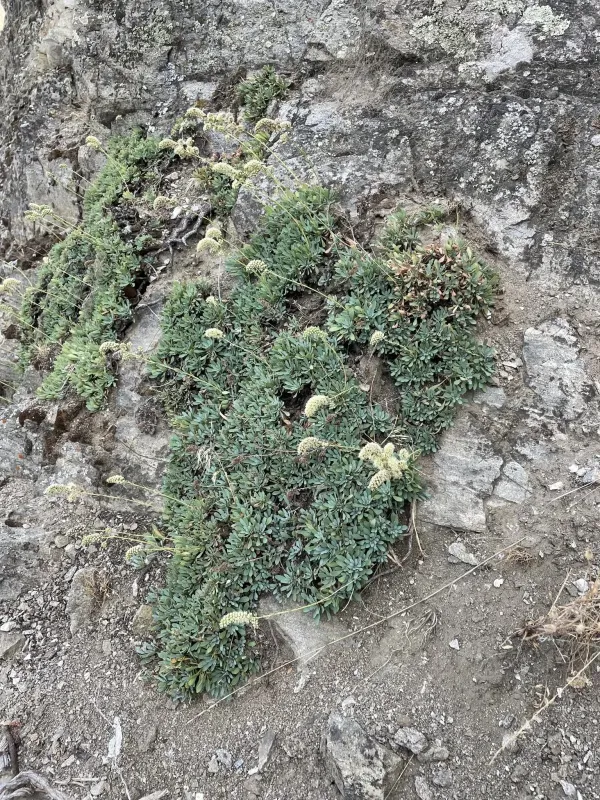
Petrophytum cinerascens is a unique perennial shrub belonging to the Rosaceae family. Native to the rocky crevices and cliffs of Washington State, USA, this plant is well-adapted to harsh environments and is highly regarded for its compact, cushion-forming habit.
Botanically, the plant is characterized by its silvery-green, pubescent leaves that grow in tight clusters. During the summer, it produces small, white, spiked inflorescences that rise above the foliage, creating an attractive contrast against its grayish, woody structure.
Success in cultivating this species requires imitating its natural rocky habitat. The soil must be gritty, well-draining, and slightly alkaline. It is imperative to avoid waterlogged conditions, as the root system of Petrophytum cinerascens is highly susceptible to rot if moisture levels are too high.
Regarding climate, the plant thrives in full sun with excellent airflow. It is exceptionally cold-hardy, capable of surviving freezing temperatures common in mountainous regions. Providing adequate sun exposure is key to maintaining the plant's dense shape and encouraging regular flowering.
In terms of usage, Petrophytum cinerascens is primarily a horticultural specimen used in rock gardens, scree slopes, and trough plantings. Its slow growth rate makes it a perfect candidate for specialized collectors and landscapers focusing on alpine and xeriscaping garden designs.
Main diseases and pests
The main threats to this species are fungal pathogens, specifically crown and root rot. These diseases are almost exclusively triggered by poor drainage and excessive moisture accumulation around the base of the plant during warm seasons.
Pest issues are generally minimal but can include common greenhouse and garden pests like aphids or spider mites. Maintaining good sanitation and ensuring the plant has enough space for airflow can prevent these infestations from becoming a significant issue.