
Petrophytum caespitosum
Petrophytum caespitosum
Description
Growing requirements
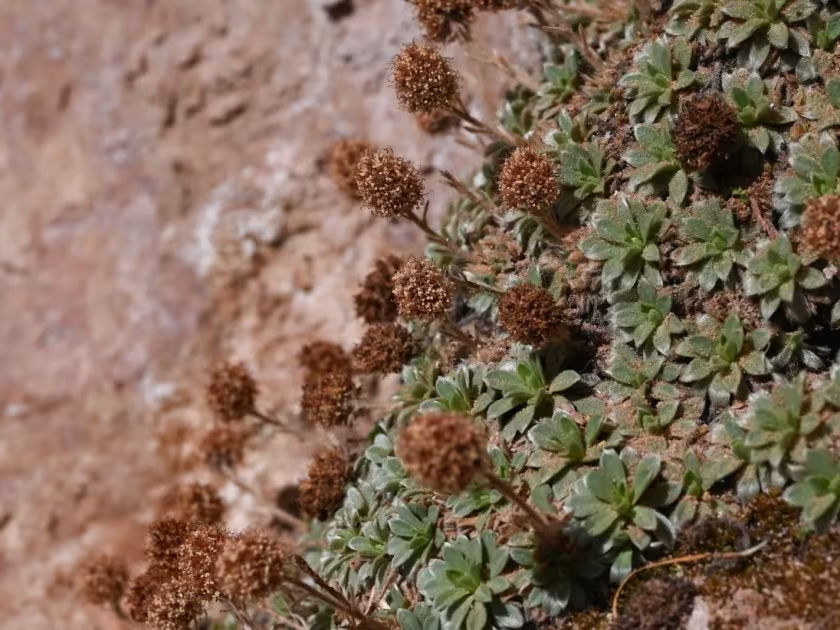
Petrophytum caespitosum is a unique member of the Rosaceae family, native to the rugged cliff environments of western North America. It is a slow-growing, evergreen shrub that develops into tight, mat-like structures, perfect for mountain-mimicking landscapes.
The plant features small, leathery, spatulate leaves arranged in dense rosettes. This specific morphology is a natural adaptation that allows the species to survive in high-altitude, nutrient-poor, and wind-exposed rocky habitats.
Successful cultivation requires a gritty, highly porous substrate. The soil must be exceptionally well-draining, as the plant is extremely susceptible to root rot if it sits in moisture for an extended period.
This species demands full sun exposure to thrive and maintain its dense, compact growth habit. In shaded environments, the plant loses its structural integrity and may become prone to fungal issues due to lack of airflow and light.
Economically and horticulturally, it serves as a high-value ornamental plant for rock gardens, scree slopes, and alpine troughs. Its resilience to harsh conditions makes it a favorite for sustainable low-maintenance gardening.
Main diseases and pests
The primary horticultural threat is overwatering, which quickly leads to crown and root decay. Proper planting techniques, including the use of gravel mulch, are essential to keep the foliage away from soil contact.
Pests such as spider mites can occasionally appear during periods of intense heat and drought. Regular inspection and maintaining the correct cultural conditions are usually sufficient to prevent significant damage to the plant.