
Perenniporia
Perenniporia Murrill
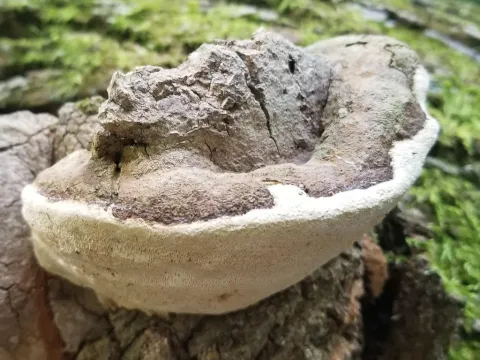
Perenniporia is a genus of fungi belonging to the Polyporaceae family. It is important to clarify that this organism is not an agricultural crop but a group of wood-decay fungi that play a significant role in forest ecology.
What the section contains

Perenniporia
These fungi are distributed globally across various forest types. They are primary decomposers, specialized in breaking down organic matter within dead or dying wood, which serves as their essential substrate for survival and development.
Botanically, Perenniporia is characterized by its perennial fruiting bodies. These structures are notably tough, often corky or woody in texture, allowing the fungus to persist on tree trunks for multiple years regardless of changing seasonal temperatures.
The development of the fungus relies heavily on environmental humidity and the presence of accessible lignin and cellulose. It thrives in shaded, moist environments where the bark of the wood remains hydrated, providing optimal conditions for spore germination.
Unlike cultivated crops, there is no agronomic management required for Perenniporia. In natural landscapes, it functions as an ecological agent, contributing to the nutrient cycle by decomposing woody material that would otherwise accumulate on the forest floor.
In the context of forestry, Perenniporia species are known for causing white rot. While this is a natural process, it can become a threat to timber production or ornamental trees if the infection causes significant structural degradation to the wood.
Infection typically occurs when fungal spores enter the tree through mechanical wounds, broken branches, or bark fissures. Once established, the mycelium gradually degrades the tree's structural integrity, increasing the risk of windthrow and wood failure.
Pests such as certain wood-boring insects may inhabit the decaying wood, occasionally acting as vectors for fungal spores. These insects benefit from the weakened state of the wood, which the fungus has already partially decomposed.
To mitigate potential damage in managed forests, professionals focus on sanitation measures. Removing heavily decayed trees and minimizing logging damage helps in limiting the spread of the fungus to healthy, vigorous timber stands.
Effective management requires distinguishing between the ecological benefits of natural decomposition and the economic risks of pathogen outbreaks. Regular monitoring remains the standard practice to ensure forest health and prevent large-scale infection.