
Ash bracket
Perenniporia fraxinea (Bull.) Ryvarden
Description
Growing requirements
The ash bracket (Perenniporia fraxinea) is a member of the Polyporaceae family. This wood-decay fungus is native to temperate regions of the Northern Hemisphere, where it acts as a significant parasite on various hardwood tree species.
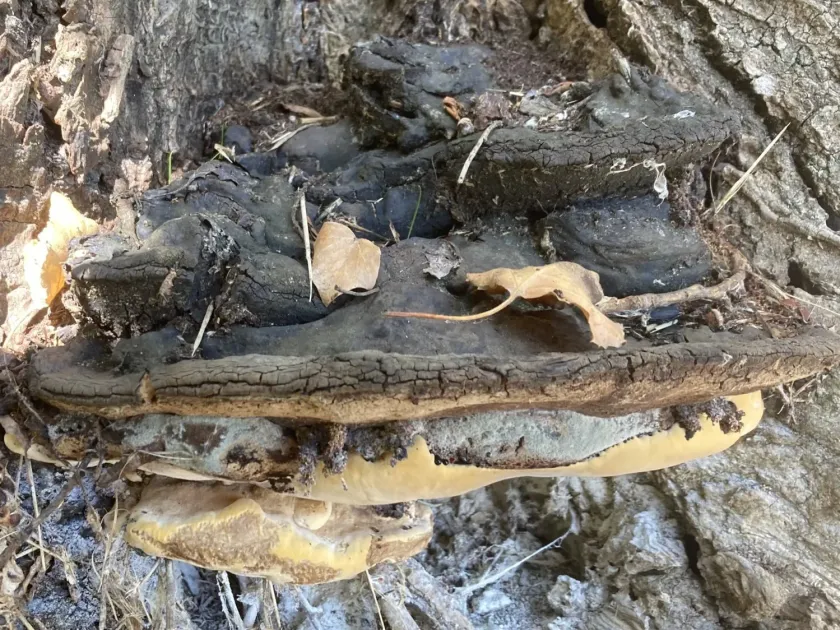
The fungus produces perennial, woody fruiting bodies typically found at the base of the tree trunk or on exposed roots. The upper surface of these brackets is usually smooth and colored in shades of brownish-yellow, while the pore surface is creamy to pale yellow.
Ecologically, the species requires specific moisture levels to colonize wood successfully. It thrives in humid forest environments, orchards, and urban parks where decaying matter and susceptible tree hosts like ash, oak, and poplar are abundant.
Soil conditions play a role in the host tree's overall susceptibility. Trees growing in nutrient-poor or overly compacted soils are often more vulnerable to infection, as their natural defense mechanisms against fungal pathogens are significantly weakened.
Climatic requirements involve moderate temperatures that support mycelial growth, typically ranging between 18°C and 25°C. The species is resilient and capable of surviving cold winter periods within the wood tissues, resuming growth as conditions improve.
Main diseases and pests
The primary threat posed by Perenniporia fraxinea is the development of white rot, which degrades structural components like lignin and cellulose. This process weakens the heartwood of the tree, leading to severe structural instability.
Disease management focuses on preventing mechanical injuries to the trunk and root zones, which serve as entry points for fungal spores. Proper pruning techniques and the use of wound sealants are recommended to reduce infection risks.
Sanitation practices are essential for controlling the spread. Affected trees showing large fruiting bodies should be evaluated for stability and removed if they pose a safety hazard to surrounding property or other trees.
Monitoring programs are crucial in maintaining forest health. Early detection through regular inspections of the tree base allows arborists to intervene before the rot reaches a stage where the tree poses an irreversible danger.
Current research suggests that maintaining tree vigor through balanced fertilization and adequate hydration is the best defense against infestation. Improving the soil aeration around the root zone can also significantly hinder the fungus's ability to establish itself.