
Swiss fleabane
Pentanema helvetica
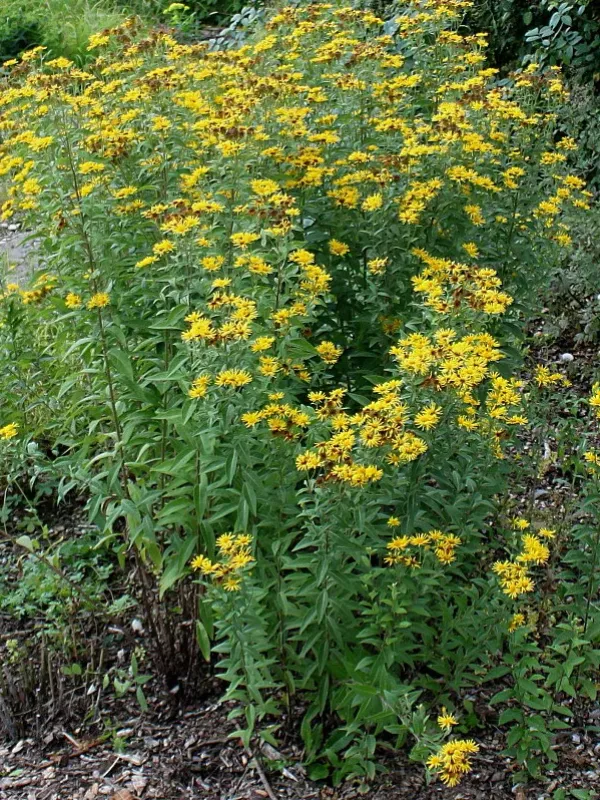
Description
Sowing dates
The sowing of Swiss fleabane is primarily carried out in the spring, once the soil temperature reaches 10–12 degrees Celsius. The optimal time is generally between mid-April and early May, allowing plants to establish root systems before the heat of summer.
For uniform germination, seeds should be sown in a prepared substrate at a depth of no more than 1–1.5 centimeters. When sowing in open fields, it is crucial to ensure consistent moisture, as small seeds are highly sensitive to the desiccation of the topsoil layer.
Raising seedlings in cassettes or greenhouses is a viable alternative, providing an advantage in root development during the early growth stages. Seedlings can be transplanted to their permanent location 45–60 days after emergence.
The planting pattern in the field should allow for row spacings of 45 to 60 centimeters to facilitate proper maintenance. Within the rows, a distance of 30–40 centimeters should be maintained between plants to ensure adequate ventilation and prevent fungal spread.
Swiss fleabane is a perennial member of the Asteraceae family; therefore, when establishing a plantation, long-term site management should be considered. Fall planting is also feasible in regions with mild winters, as seeds often benefit from natural stratification.
Growing requirements
This crop prefers sunny locations with moderately moist, well-drained soil. Ideal conditions include loamy or sandy soils that are rich in humus and possess a neutral to slightly alkaline pH level.
The plant exhibits high adaptability to alpine and subalpine conditions due to its natural evolutionary origins. While it can withstand brief periods of drought, regular irrigation is essential to achieve high yields of high-quality biomass for industrial use.
A critical factor for successful growth is the prevention of water stagnation in the root zone, as excessive moisture often leads to root rot. High nitrogen content in the soil promotes rapid vegetative growth, which is necessary for the development of the harvestable plant mass.
Climate requirements include a moderate amount of rainfall during the growing season and sufficient exposure to sunlight. Excessive shade can cause plants to grow leggy, which negatively impacts the accumulation of biologically active substances in the roots.
Soil preparation involves deep autumn plowing and the incorporation of organic fertilizers, such as compost or well-rotted manure. In nutrient-poor soils, phosphorus and potassium amendments are recommended at the start of the spring growing season.
Yield
The productivity of Swiss fleabane is measured by the yield of dried raw material, harvested from the rhizomes in the second or third year. Average yields range from 1.5 to 3 tons of dried roots per hectare under optimal cultivation conditions.
The accumulation of inulin and essential oils in the root system peaks by the autumn of the second year of vegetation. During this period, the concentration of active components in the plant tissues is most stable for pharmaceutical extraction.
During the first year, yields are limited as the plant focuses on rosette formation and deep root development. Intensive growth of biomass is observed starting from the second year, when the plant begins to produce generative shoots and flower stalks.
Regular cultivation between rows and weed control can increase overall yields by 20–30 percent. Controlling planting density prevents competition for nutrients, ensuring that all plants within the plot develop uniformly and healthily.
Final harvesting is performed mechanically using specialized root diggers adapted for deep excavation. Once extracted, the roots must be thoroughly cleaned of soil, washed, and directed to drying facilities to preserve their chemical integrity.
Main diseases and pests
The most common diseases affecting Swiss fleabane include powdery mildew and various leaf spot pathogens, which typically thrive in high humidity. Preventive strategies include maintaining optimal planting density to allow for proper airflow.
Root rots pose a serious threat if irrigation schedules are ignored or if the crop is planted in heavy, waterlogged soils. Crop rotation and the use of certified, disease-free planting material are essential components of a healthy agricultural program.
Pests such as aphids and spider mites can cause significant damage by feeding on the sap of young leaves. Infestations are frequently linked to stress caused by drought or a lack of essential micronutrients in the growing environment.
Nematodes can infest the root system, resulting in stunted growth and yellowing of the foliage. Management involves rigorous soil preparation and the implementation of a diverse crop rotation cycle to break pest life cycles.
Integrated pest management (IPM) techniques, including biological control agents, should be prioritized for crop protection. Chemical pesticides should be used strictly as a last resort and must comply with regional agricultural regulations.
Harvesting
Harvesting is typically conducted in the autumn, after the growing season has ended and the above-ground foliage begins to wither. During this time, there is a natural translocation of nutrients from the leaves back into the root system.
Rhizomes are carefully excavated to avoid damaging the main mass, where the target secondary metabolites are concentrated. Minimizing mechanical damage during excavation is vital for maintaining the quality and shelf life of the final medicinal product.
Immediately after digging, the roots must be cleared of stems, debris, and soil particles using brushes or water jets. Rapid primary processing is essential to prevent fermentation and the loss of volatile compounds, including essential oils.
Drying requires a controlled temperature environment to avoid overheating, which can lead to the evaporation of key aromatic compounds. Properly dried roots should be firm, fragrant, and free of any visible mold or fungal growth.
Final storage takes place in dry, well-ventilated facilities using airtight containers to protect the material. Effective logistics and storage protocols allow the harvested fleabane to retain its commercial value for several years prior to processing.