
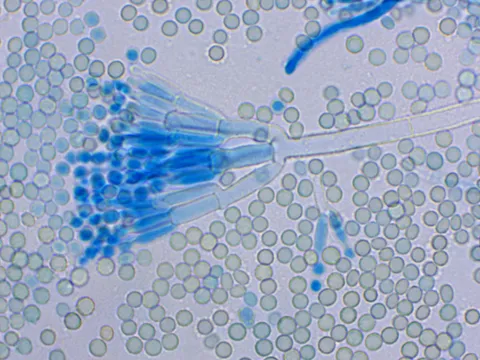
Penicillium
Penicillium Link
In industrial settings, Penicillium is not "sown" in soil but is inoculated into a prepared nutrient medium using a pure culture of the fungus. The process begins with the preparation of a sterile substrate rich in carbohydrates and nitrogenous compounds in a controlled laboratory environment.
What the section contains

Penicillium
Inoculation is performed by introducing spores or mycelium into a sterile liquid or solid-state substrate. Maintaining high levels of sterility is crucial to prevent contamination of the culture by other molds or bacteria.
Specialized fermenters are used to activate fungal growth, where oxygen concentration and nutrient levels are strictly maintained. The culture grows rapidly, forming a dense mycelium that covers the surface or permeates the entire volume of the medium.
The optimal timing for starting the cultivation depends on the selected strain and the target product, such as antibiotics or enzyme preparations. The entire process is strictly monitored by automated systems to ensure the stability of biosynthesis.
After reaching the phase of maximum accumulation of secondary metabolites, the cultivation cycle is concluded. Promptly transitioning the fungus from the growth phase to the production phase ensures the highest yield of useful compounds.
Penicillium belongs to the Aspergillaceae family and is one of the most undemanding saprotrophic fungi. These fungi are capable of developing on a wide variety of substrates, ranging from plant residues to food products and organic waste.
A key requirement for development is high humidity, which is necessary for spore germination and mycelium expansion. The optimal temperature for most species ranges from +20°C to +28°C, although the fungus remains viable across a wide temperature range.
For active metabolism, Penicillium requires good aeration, as most species are obligate aerobes. In closed fermenters, forced supply of sterile air is essential to support the respiration process.
Soil-dwelling species prefer loose, organic-rich substrates with a neutral or slightly acidic pH. They are highly efficient at decomposing cellulose, lignin, and other complex organic compounds, playing a significant role in humification processes.
In industrial environments, substrate requirements are determined by the specifics of the target product. Media based on corn steep liquor, molasses, or synthetic salt and vitamin solutions are frequently used to achieve a consistently high biomass yield.
The yield of Penicillium in microbiological production is measured by the output of the target substance per unit of volume or mass of the substrate. Modern selected strains demonstrate yields far exceeding those of wild ancestors.
Biomass yield depends on the composition of the medium and the cultivation conditions. With optimized processes, the fungus can process significant volumes of organic matter, transforming it into enzymes, organic acids, or antibacterial compounds.
Quantitative yield is also determined by the rate of cell division and the density of the mycelial mass. In bioreactor conditions, the product output can reach tens of grams of active substance per liter of medium.
Standardization of conditions allows for the minimization of losses and ensures consistent yields throughout the production cycle. Technological innovations aim to enhance the conversion of the substrate into the target metabolite.
Production efficiency is evaluated not only by biomass but also by the activity of the enzymes produced by the fungus. High-productivity cultures require constant monitoring to maintain the original properties of the strain.
The main threat to Penicillium culture in industrial conditions is bacterial contamination. The invasion of foreign bacteria can completely suppress fungal growth and destroy the target metabolic products.
In the natural environment, Penicillium competes with other soil microorganisms for nutrient resources. Its natural ability to produce antibiotics acts as a defense mechanism against such competitors.
Viral infections of the mycelium, known as mycoviruses, can lead to reduced strain productivity and disruption of the synthesis processes of useful compounds. This requires strict monitoring of the purity of the starter material.
Adverse climatic factors, such as sudden temperature shifts or total lack of moisture, can force the fungus into a dormant state (sporulation), halting the production of useful substances.
- Bacteria of the Bacillus genus
- Mycoviruses (fungal viruses)
- Other competitive mold fungi
- Yeast cultures
- Toxic impurities in raw materials
The harvest (or biomass collection) begins after the fermentation stage is completed. The primary method is filtration, which allows for the separation of the mycelium from the nutrient medium containing dissolved target substances.
In processes where the mycelium itself is the valuable product, it is washed, cleaned of medium residues, and subjected to drying or further processing. When extracting metabolites, processes such as solvent extraction or ion-exchange chromatography are used.
Harvest timing is determined by analytical control of the product concentration levels in the medium. Delaying the harvest can lead to autolysis of the mycelium and degradation of accumulated active compounds by the fungus's own enzymes.
Harvesting techniques require airtight equipment to ensure personnel safety and prevent the release of fungal spores into the environment. Centrifuges and industrial filter presses are commonly utilized.
After the target product is extracted, the remaining biomass is often disposed of or processed into feed additives following deep sterilization. The harvesting process is the final stage of the biotechnological cycle.