
Pediastrum tetras
Pediastrum tetras
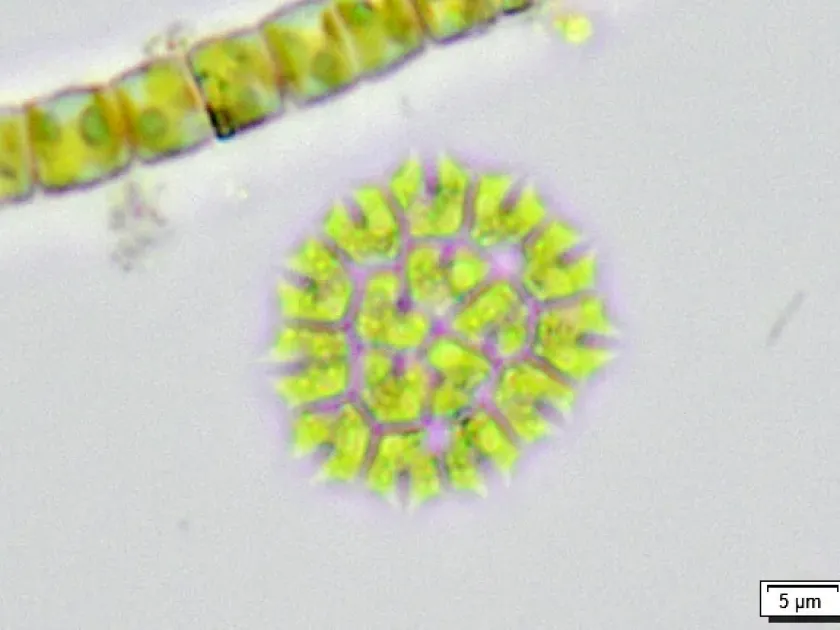
Description
Growing requirements
Pediastrum tetras is a microscopic freshwater green alga belonging to the Hydrodictyaceae family. It is recognized by its unique colonial structure, where cells are arranged in a flat, star-like or polygonal pattern.
While not a traditional land crop, this organism is vital in biotechnology and aquatic farming. Growth environments must be carefully controlled, prioritizing clear water with balanced mineral contents, specifically nitrogen and phosphorus.
The optimal climate for this species involves stable temperatures between 18 and 25 degrees Celsius. Intense light exposure is critical for maintaining efficient photosynthesis, which drives the formation of new colonial cells.
Regarding water quality, a neutral to slightly alkaline pH is preferred. Environmental cleanliness is paramount, as organic pollutants or industrial contaminants can inhibit growth and lead to the degradation of the algal colony structure.
Pediastrum tetras is naturally distributed in standing freshwater bodies globally. Its ability to adapt to diverse environments makes it a resilient subject for controlled laboratory or pond cultivation studies.
Yield
In aquaculture, the yield of Pediastrum tetras is evaluated by the total dry biomass collected from a specific volume of water. High-density photobioreactors are used to maximize productivity in industrial settings.
The biomass serves as a high-protein feed component for fish larvae and various crustacean species. This nutritional value contributes to more efficient growth cycles for many economically significant aquatic animals.
Optimization of yield involves managing light penetration and gas exchange, particularly carbon dioxide supply. Proper management allows for continuous cultivation and harvesting intervals to maintain high production rates.
Harvesting techniques typically include centrifugation or micro-filtration of the water medium. This ensures that the delicate colonial structures are captured while excess waste and fluids are removed efficiently.
By monitoring the growth phase, managers can determine the exact timing for harvest to ensure the highest concentration of lipids and proteins within the algal cells before they reach the senescence stage.
Main diseases and pests
Primary threats to Pediastrum cultures include grazing by zooplankton such as rotifers and daphnia. Maintaining a sterile or filtered environment is essential to prevent these organisms from decimating the crop.
Algal pathogens, including specific viruses and chytrid fungi, represent a serious risk. Early detection of colony fragmentation or discoloration is vital for applying control measures before an entire batch is lost.
Chemical imbalances, particularly sharp changes in pH or salinity, can cause immediate stress. These conditions result in the breaking apart of the typical Pediastrum colonial form, reducing overall fitness.
Competition from unwanted bloom-forming cyanobacteria is a major challenge in open-air pond cultivation. This competition can quickly lead to the decline of Pediastrum colonies by depriving them of light and nutrients.
Lack of proper agitation or flow can lead to thermal layering in tanks, creating hotspots that negatively affect growth. Consistent circulation is therefore a necessary requirement for healthy biomass development.