
Pediastrum boryanum
Pediastrum boryanum
Description
Growing requirements
Pediastrum boryanum is a common species of green freshwater algae belonging to the family Hydrodictyaceae. It is widely distributed across the globe, inhabiting stagnant or slow-flowing freshwater environments, where it plays a fundamental role in the aquatic ecosystem.
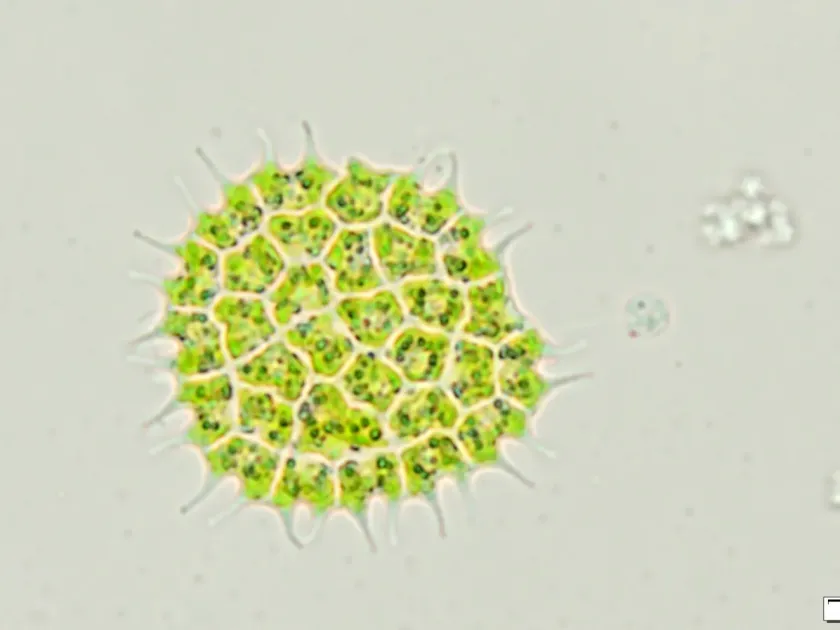
The organism is defined by its colonial morphology, forming flat, disc-shaped, or star-like colonies known as coenobia. Each colony is composed of several cells arranged in a single layer, with the marginal cells featuring distinct processes or lobes that are specific to the species.
As a photosynthetic organism, Pediastrum boryanum relies heavily on sufficient light availability and the presence of dissolved inorganic nutrients. It thrives best in well-oxygenated water with a neutral to slightly alkaline pH, making it sensitive to environmental pollution.
Regarding climate and habitat, this species prefers temperate water conditions, with optimal growth occurring between 18 and 26 degrees Celsius. Stable environmental conditions are crucial; frequent fluctuations in water temperature can disrupt the cell division cycle and colony formation.
Agrotechnical management in aquaculture involves monitoring water quality parameters such as nitrate and phosphate levels. Proper light penetration and consistent circulation are necessary to maintain high population density and prevent the accumulation of organic waste on the bottom of tanks.
Yield
While not a traditional agricultural crop, Pediastrum boryanum is highly valued in fisheries and fish farming. It serves as a natural food source for various aquatic organisms, including larvae and small invertebrates, thereby contributing to the overall productivity of the aquatic environment.
Main diseases and pests
The main threats to Pediastrum boryanum include predation by zooplankton species like Daphnia, which consume the colonies as a primary food source. Additionally, bacterial and viral infections, as well as shifts in water chemistry due to toxic algal blooms, can severely deplete populations.