
Vaseygrass
Paspalum urvillei Steud.
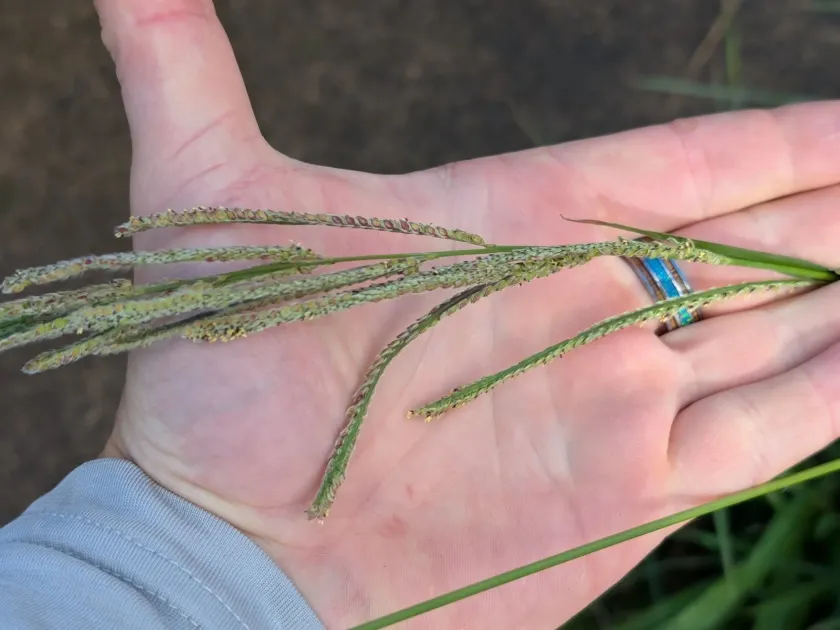
Description
Growing requirements
Vaseygrass (Paspalum urvillei Steud.) is a perennial grass species belonging to the Poaceae family. Known for its robust growth, it typically forms dense tufts and can reach heights of up to 2 meters under optimal environmental conditions.
Originating from South America, the species has successfully naturalized across many subtropical and tropical regions globally. It is commonly found in moist areas, including drainage ditches, roadsides, and open fields, where it competes effectively with local vegetation.
The plant demonstrates significant tolerance to various soil types, including sandy, loamy, and slightly acidic soils. While it prefers moist environments, it is capable of enduring brief periods of drought once the root system is well-established.
Climate-wise, Vaseygrass thrives in regions with warm summers and mild winters. It is highly sensitive to frost, which limits its primary agricultural cultivation to areas that do not experience prolonged sub-zero temperatures during the winter months.
Successful cultivation requires a well-prepared seedbed and adequate moisture during the germination stage. Because the seeds are small, they should be sown shallowly and covered lightly to ensure optimal contact with the soil for germination.
Yield
In agricultural settings, Vaseygrass is primarily utilized as a forage grass for cattle. Its high vegetative production makes it a valuable component in pasture systems, particularly in warm-climate regions where other cool-season grasses might fail.
The yield potential of this species is highly dependent on nitrogen fertility and water availability. Under intensive management, it can produce multiple harvests per season, ensuring a consistent supply of green forage throughout the active growing period.
Management of harvest timing is critical for maintaining forage quality. As the plant approaches the reproductive phase, the stems become fibrous and lignified, which significantly reduces palatability and nutritional value for livestock.
Vaseygrass can be used for hay production, although its high moisture content in the stems requires careful drying procedures. Alternatively, it can be ensiled, providing a good source of fiber and energy for ruminants during the winter season.
Its high seed production capability contributes to its ability to colonize large areas quickly. While this is an advantage for land reclamation and pasture establishment, it necessitates careful management to prevent the plant from becoming invasive.
Main diseases and pests
The most significant pathological threat to Vaseygrass is ergot, caused by the fungus Claviceps. The presence of ergot sclerotia in the seed heads can pose toxicity risks to livestock, requiring careful field monitoring and harvest management.
Insect pests, particularly various species of fall armyworms, can cause substantial damage to the foliage during the peak growing season. Regular field scouting and the use of integrated pest management strategies are recommended to mitigate losses.
Due to its aggressive growth habit, Vaseygrass may be classified as a weed in certain cropping systems. Preventing its spread into adjacent cultivated fields is an important aspect of overall farm management and weed control programs.
Seedling competition is a factor to consider during the establishment phase. Proper spacing and the reduction of competing weeds during the first season of growth are essential for developing a strong, productive stand of grass.
Overall, Vaseygrass is a resilient plant that requires moderate care. By balancing the need for biomass production with timely management of pests and diseases, it remains a reliable forage resource in suitable agricultural regions.