
Henry's Virginia Creeper
Parthenocissus henryana (Hemsl.) Diels & Gilg
Description
Growing requirements
Henry's Virginia Creeper (Parthenocissus henryana) is an ornamental climbing vine belonging to the Vitaceae family. Native to the woodlands of central and western China, this plant is valued for its unique foliage and vigorous growth.
The species prefers fertile, well-draining soil with a pH ranging from slightly acidic to neutral. It is essential to ensure consistent soil moisture, particularly during the first few years after planting while the root system is becoming established.
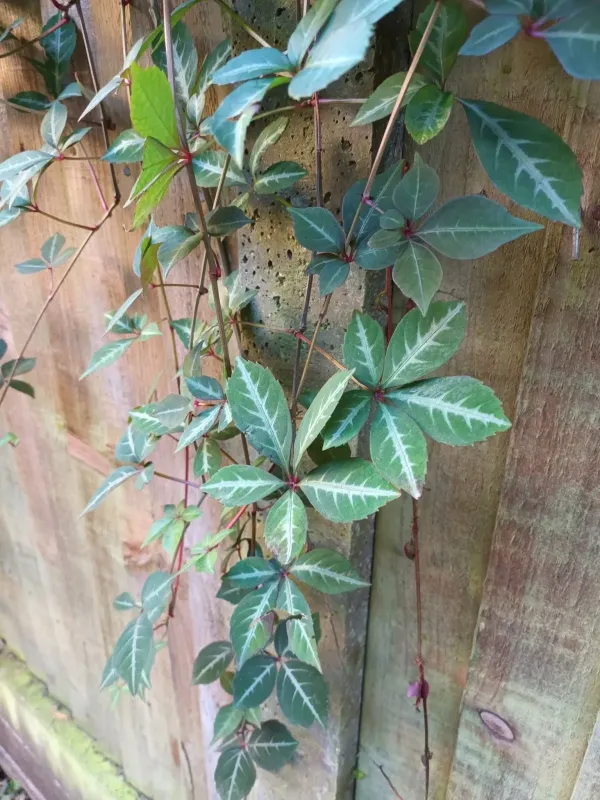
Light requirements for this species are specific: it thrives best in partial shade. While it can tolerate deeper shade, its characteristic silvery-white vein patterns and reddish undersides are most vivid when the plant receives dappled light.
Climatically, it is suited for temperate regions, though it is less cold-hardy than its cousin, the common Virginia Creeper. In regions with harsh winters, providing a sheltered location near a wall or structure is recommended to protect the plant from freezing winds.
Its botanical structure includes compound leaves with 3 to 5 leaflets. The plant uses adhesive tendrils to climb surfaces, making it an excellent choice for brick walls, fences, and trellises where it can create a dense, vertical green screen.
Main diseases and pests
While generally robust, Henry's Virginia Creeper may face specific biological challenges under suboptimal environmental conditions, requiring timely monitoring.
Powdery mildew represents the most significant fungal threat, typically triggered by high humidity and poor air circulation. Proper spacing and thinning out dense growth can mitigate this risk significantly.
Aphids can infest the tender tips of new shoots during the spring growth flush. These pests sap nutrients from the plant, leading to distorted growth and reduced vitality if left untreated.
Leaf-eating caterpillars occasionally damage the foliage. While usually not fatal to a mature plant, they can degrade the aesthetic value of the vine, requiring manual removal or biological insecticides.
Root rot is a critical threat often caused by waterlogged soil. To prevent this, ensure that the planting site has excellent drainage and avoid heavy irrigation during dormant or rainy periods.