
Parartocarpus bracteata
Parartocarpus bracteata
Description
Growing requirements
Parartocarpus bracteata is a majestic evergreen tree belonging to the Moraceae family, native to the tropical rainforests of Southeast Asia. It is highly valued for its large stature, reaching heights up to 40 meters, which defines its significant role in the forest canopy.
The tree thrives in lowland areas with abundant rainfall, requiring well-drained, nutrient-rich soils to support its rapid biomass accumulation. Consistent humidity throughout the year is a prerequisite for its healthy growth, as it cannot tolerate prolonged periods of desiccation.
In its native range, including Malaysia and Indonesia, the species occupies primary forests and shows a preference for deep soils. Understanding its ecological niche is essential for successful forest management and large-scale propagation of the species.
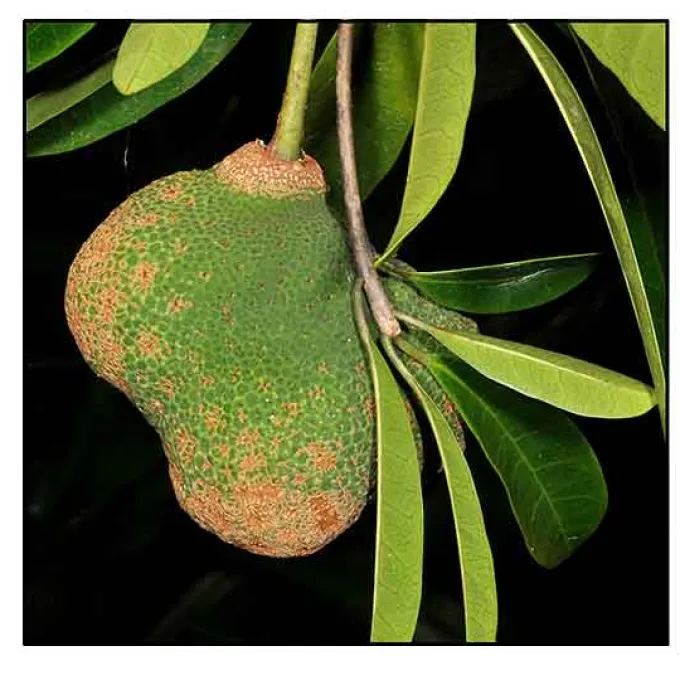
Botanically, it features leathery leaves and unique inflorescences that develop into nutrient-rich fruits. The plant's structure is adapted to maximize photosynthesis in competitive light conditions, typical of dense tropical vegetation.
Cultivation practices involve site preparation that mimics the natural forest floor environment. Proper spacing is vital to avoid overcrowding, as mature trees develop wide-spreading crowns that require substantial space to develop healthily.
Harvesting
The primary economic output of Parartocarpus bracteata is its high-quality timber, which is robust and suitable for various construction purposes. Harvesting is typically conducted in a sustainable manner, ensuring the survival of the forest ecosystem while providing for commercial needs.
The fruits of the tree are edible and represent an important non-timber forest product. They are manually collected at the peak of maturity to ensure the best flavor and nutritional properties before they fall and spoil.
Post-harvest management of the fruit involves careful handling to prevent bruising, followed by immediate processing or distribution to local markets. For timber, a controlled drying process is required to achieve the desired moisture content for industrial usage.
Ongoing research aims to identify superior genetic variants that demonstrate faster growth rates and increased resistance to local pathogens. This focus on improvement helps to maximize the output from dedicated plantation areas.
Sustainable forest management strategies are implemented to ensure that harvest rates remain within the limits of natural regeneration, thereby preserving the ecological integrity of the areas where this species is cultivated.