
Panzerina lanata
Panzerina lanata
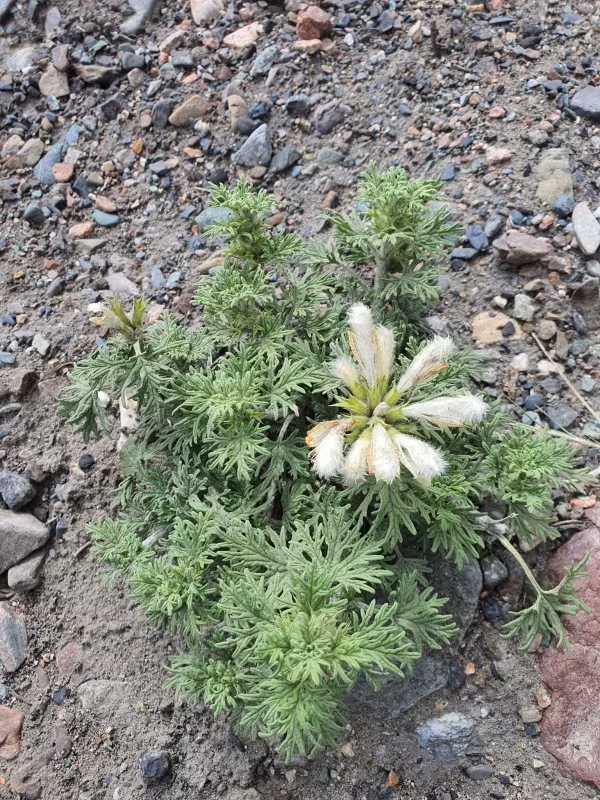
Description
Sowing dates
Panzerina lanata is typically sown in early spring as soon as the soil reaches a temperature of 5 to 8 degrees Celsius.
The seeds require a period of cold stratification or late autumn sowing to overcome dormancy, which ensures uniform germination in the field.
The seeding depth should be shallow, generally not exceeding 1.5 cm, as the seeds are small and have limited nutrient reserves for emergence.
For industrial cultivation, row seeding with 45 cm spacing is recommended to provide sufficient space for plant development and mechanical weed control.
Post-sowing soil compaction is vital to ensure proper contact between the seeds and the soil, which helps in retaining moisture for the germinating sprouts.
Growing requirements
As a member of the Lamiaceae family, this plant is naturally adapted to steppe and semi-desert conditions, demonstrating excellent drought resistance.
Panzerina lanata prefers well-drained, light, and aerated soils, avoiding heavy or waterlogged areas where root systems could easily fail.
The plant requires full sun exposure and does not tolerate competition from weeds, which can shade the leaves and hinder growth.
Moderate temperatures ranging from 20 to 25 degrees Celsius during the vegetative period are ideal for maximizing biomass production.
The plant thrives in neutral to slightly alkaline soil environments, which are characteristic of its native geographical distribution.
Yield
Under optimal cultivation conditions, the harvest yield of dried aerial parts can reach between 1.5 and 2 tonnes per hectare.
Productivity peaks in the second and third years after planting, making it a viable multi-year crop for medicinal herb production.
Proper nutrient management, specifically moderate nitrogen application, is essential to balance biomass production and the synthesis of active compounds.
Uniform stand density is critical for yield consistency and allows for standardized mechanical harvesting processes throughout the field.
Successful yields are highly dependent on the timely control of competitive weeds during the early stages of the crop's establishment.
Main diseases and pests
Panzerina lanata is generally resistant to many common agricultural pests and diseases due to its specific chemical composition.
However, during extremely wet seasons, the plant may become susceptible to root rot if the soil drainage is not sufficient.
The main threats to successful cultivation include weed infestation, which can outcompete the crop for water and nutrients.
Soil-dwelling insects can occasionally affect seedlings, though such damage is usually sporadic and rarely impacts the entire plantation.
Integrated pest management, focusing on field hygiene and crop rotation, is the most effective approach to minimize risks to the crop.
Harvesting
The harvest period corresponds with the full flowering phase of the plant, ensuring that active substances are at their maximum concentration.
Harvesting is performed by mowing the aerial biomass approximately 5–7 cm above the ground to promote regrowth in subsequent years.
Immediate post-harvest processing is required to prevent the degradation of essential oils and other valuable compounds in the plant tissue.
Drying must be conducted in the shade with efficient ventilation, keeping temperatures below 45 degrees Celsius to maintain chemical integrity.
Once dried, the raw material should be packaged in breathable, protective materials and stored in a cool, dry, and dark environment.