
Panzerina canescens
Panzerina canescens
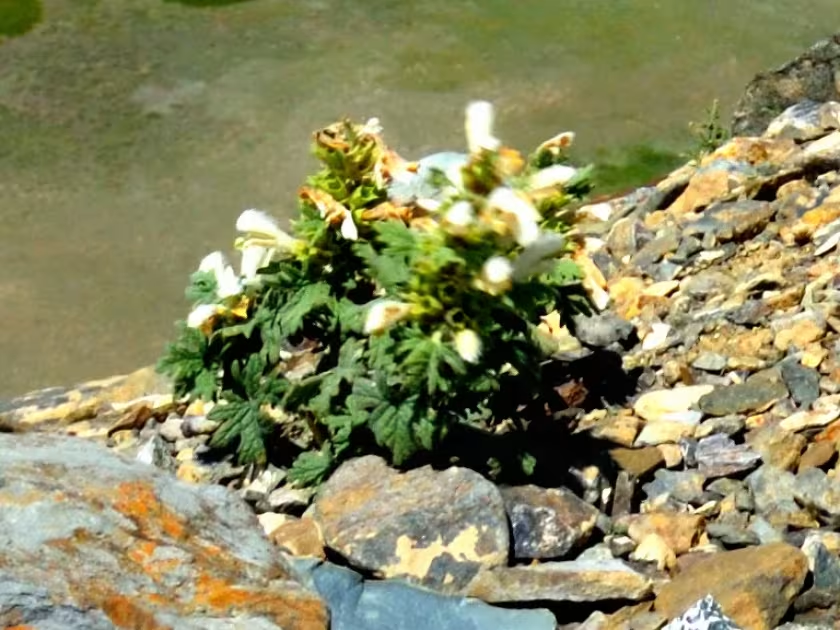
Description
Sowing dates
Panzerina canescens is a perennial plant, and its propagation in agricultural settings is generally initiated through seed sowing.
The best time for sowing is early spring, which allows the seeds to utilize soil moisture effectively for early development.
Seeds should be planted at a shallow depth to ensure they receive adequate oxygen and warmth for the germination process to begin successfully.
Proper field preparation is essential, as the seeds require a fine-textured seedbed to establish good contact with the soil particles.
During the first growth season, the plants concentrate their energy on root establishment and forming a rosette of leaves before transitioning to full stem development.
Growing requirements
This species is highly adapted to arid and semi-arid environments, thriving in regions where moisture levels are often limited.
Full sun exposure is a non-negotiable requirement for this plant, as it maximizes the metabolic processes needed to store chemical compounds.
Well-drained soil, preferably sandy or rocky in texture, is the primary condition to prevent the root rot that this plant is susceptible to.
It exhibits remarkable frost tolerance, enabling it to survive in continental climates with severe temperature fluctuations between seasons.
The plant does not require high levels of soil fertility and can successfully grow in marginal lands where other crops would fail to establish.
Main diseases and pests
The plant possesses natural chemical defenses that significantly reduce the impact of typical agricultural pests found in traditional fields.
Excessive humidity remains the biggest threat, often leading to the development of mildew or other foliage-related fungal pathogens.
Poor soil aeration can lead to root system decay, which is the most frequent cause of failure in newly established cultivation plots.
Monitoring for localized outbreaks of sap-sucking insects during unusually wet years is advised to protect the yield quality.
Good field hygiene, including the removal of infected debris and ensuring proper spacing between plants, is essential to minimize disease transmission.