
Butterweed
Packera glabella
Description
Growing requirements
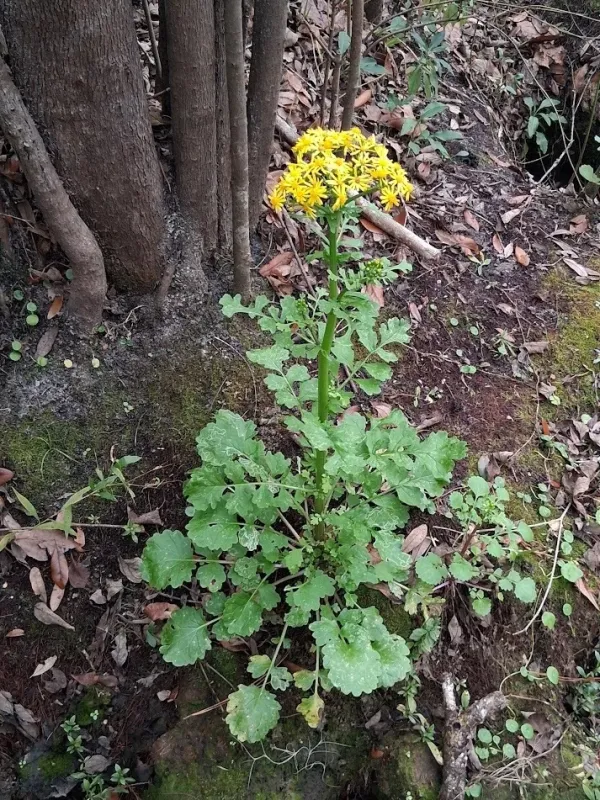
Butterweed, known scientifically as Packera glabella, is an annual or biennial herbaceous plant belonging to the Asteraceae family.
It is native to North America, where it thrives in moist, open environments such as floodplains, wet meadows, and marshy soil conditions.
Botanically, it is distinguished by its glabrous (smooth) stems and pinnately lobed basal leaves, which develop into a rosette before the stem elongates.
The plant demonstrates a high demand for soil moisture and typically grows best in rich, silt-loam soils that maintain consistency throughout the growth cycle.
Due to its rapid growth in favorable conditions, it can act as a pioneer species in disturbed areas or natural wetlands where other vegetation has been removed.
Main diseases and pests
The primary threats to this plant are soil pathogens that cause root degradation, particularly in poorly drained agricultural environments.
Fungal leaf spots can occur when humidity levels remain excessively high, negatively impacting the plant's photosynthetic capacity.
Insect pests such as leaf-miners and various sucking insects may target the foliage, causing stunting during the vegetative growth phase.
It is worth noting that Packera glabella contains pyrrolizidine alkaloids, which are toxic to livestock and can cause liver damage if ingested in significant quantities.
Agricultural management often focuses on preventing its spread into managed pastures or crop fields through early mowing and proper land drainage techniques.