
Pachypodium rosulatum
Pachypodium rosulatum
Description
Growing requirements
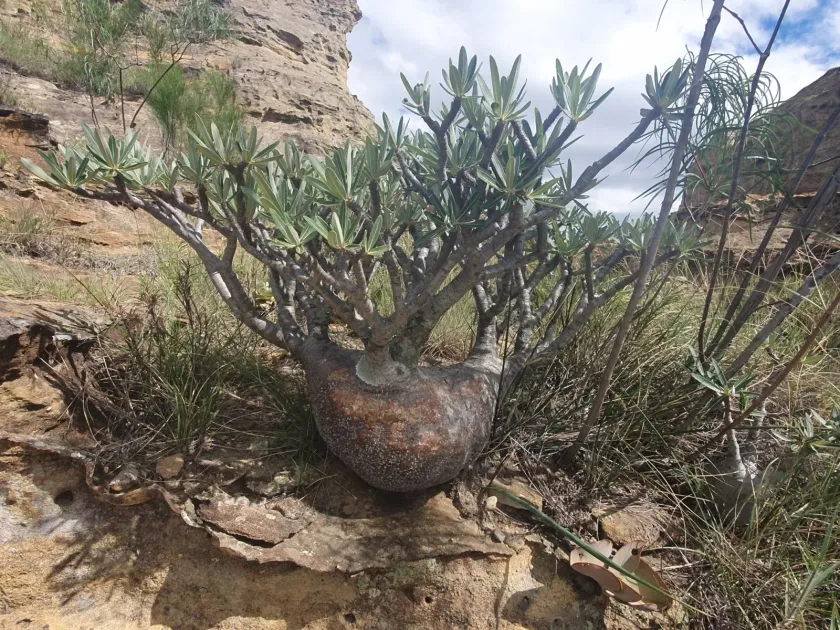
Pachypodium rosulatum is a succulent species belonging to the Apocynaceae family, native to the arid rocky terrains of Madagascar. This culture is widely recognized for its swollen, water-storing trunk known as a caudex, which allows it to thrive in extremely harsh environments.
Botanically, the plant features distinct spines arranged in pairs and attractive rosettes of leaves at the ends of branches. It produces prominent yellow flowers, which is a major ornamental feature for both professional collectors and amateur growers.
The climate requirements emphasize the need for high light intensity, as the plant is adapted to full sun exposure. In cultivation, it requires a minimum temperature of 15°C and cannot tolerate frost or prolonged damp conditions.
Soil management for this culture is based on excellent drainage and aeration. A substrate consisting of coarse sand, pumice, and a small portion of organic matter is recommended to prevent water retention around the root ball.
A successful cultivation strategy involves a strictly seasonal watering regime. During the growing season, water should be applied once the soil is completely dry, whereas the dormant winter season requires almost complete dryness to avoid rotting the sensitive root system.
Main diseases and pests
The primary threat to the health of Pachypodium rosulatum is root rot caused by stagnant water in the potting medium. High humidity levels combined with low temperatures significantly increase the risk of fungal infections.
Common pests include spider mites and mealybugs, which are particularly attracted to the tender parts of the plant and new growth. Regular inspection and the use of appropriate chemical controls are necessary to maintain plant vitality.