
Pachypodium namaquanum
Pachypodium namaquanum
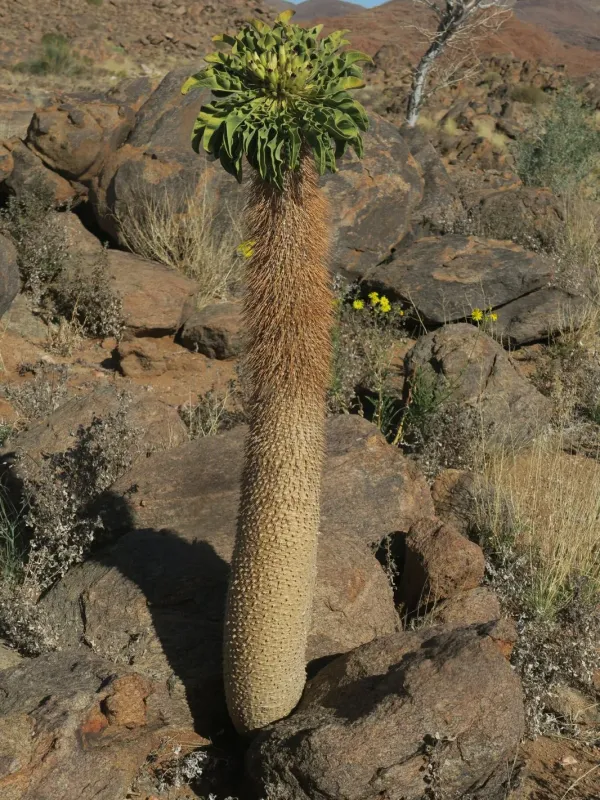
Description
Growing requirements
Pachypodium namaquanum is a distinctive succulent shrub belonging to the Apocynaceae family. Native to the arid regions of the Namib Desert and South Africa, this species is well-adapted to extreme environmental conditions and is highly valued in specialty horticulture.
The primary cultivation requirement is high-intensity sunlight combined with excellent ventilation. In an artificial environment, maintaining adequate light levels is critical; otherwise, the plant will lose its compact shape and vigor, becoming prone to various developmental issues.
For optimal growth, the growing medium must be highly porous and mineral-based. A mixture of pumice, coarse sand, and a minimal amount of inorganic substrate is recommended to prevent water retention and to facilitate rapid drainage, which is essential for healthy root development.
Agrotechnical management involves a strict cycle of wet and dry periods. Watering must be significantly reduced or suspended during the plant's winter dormancy phase, as moisture stagnation in cold temperatures is the most frequent cause of premature death for this species.
This crop is not grown for mass production but holds significant value for botanical collections and specialized nurseries. Propagation is challenging and requires precise environmental control, making it a slow-growing specimen that rewards professional horticultural attention.
Main diseases and pests
The main phytosanitary threat to Pachypodium namaquanum is rot-inducing fungi triggered by overwatering or poor drainage. Once established in the succulent stem, fungal infections are difficult to eradicate, emphasizing the importance of preventative soil management.
Pest pressure is primarily caused by sucking insects such as mealybugs and spider mites, which thrive in protected environments like greenhouses. Regular inspections of the foliage and growing points are necessary, accompanied by the application of targeted insecticides when infestation occurs.