
Pachypodium mikea
Pachypodium mikea
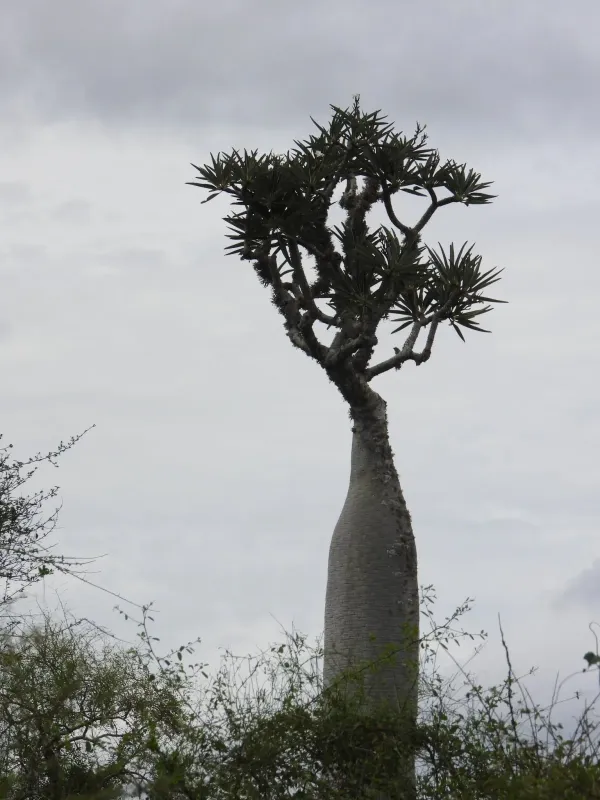
Description
Growing requirements
Pachypodium mikea is a distinctive, caudiciform succulent species belonging to the Apocynaceae family. Native to the arid regions of southwestern Madagascar, this plant has adapted to survive extreme heat and prolonged water scarcity.
The plant features a swollen, bottle-shaped trunk that acts as a water reservoir, ensuring survival during dry seasons. Its surface is armed with sharp spines, providing necessary protection against herbivores in its natural habitat.
Cultivation requires very high levels of direct sunlight to maintain the plant's structural integrity. Growing it in low-light conditions will lead to etiolation, making the stem thin, weak, and susceptible to collapsing.
The potting medium must be highly porous and inorganic to facilitate rapid water drainage. A mixture containing coarse sand, pumice, or perlite with minimal organic soil is considered ideal for healthy root development.
During the growing season, temperatures should be maintained between 22 and 30 degrees Celsius. In winter, the plant enters a dormant phase and requires a cool, dry environment with minimal to no water to prevent rot.
Main diseases and pests
The most significant threat to Pachypodium mikea is overwatering, which leads to root and stem rot. Once rot sets in, it spreads quickly through the water-storing tissues, making the plant difficult to save.
Common pests include spider mites and mealybugs, which tend to hide among the dense spines. These pests drain the plant of its sap, leading to stunted growth and yellowing of the foliage.
Effective pest control involves regular inspections and the application of systemic pesticides or horticultural oils. Care must be taken to ensure that the treatment does not damage the succulent’s delicate epidermis.
Poor ventilation combined with high humidity increases the risk of fungal infections and spots on the trunk. Always provide adequate air circulation to prevent the buildup of moisture in the plant's crevices.
Preventative measures are essential, including keeping the plant dry during winter dormancy. If any soft, mushy spots appear on the trunk, immediate action is required, including the excision of diseased tissue.